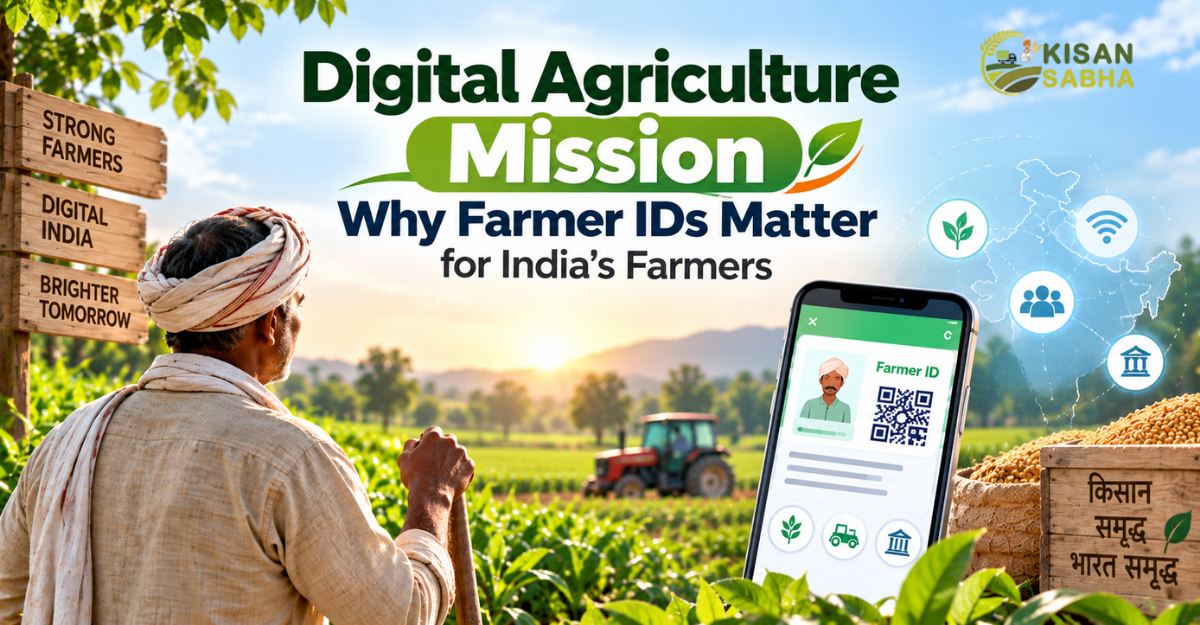
India is building one of the largest digital identity systems for farmers in the world. It is called the Digital Agriculture Mission, and its goal is simple. Give every farmer a verified digital identity, called a Farmer ID, so that loans, subsidies, and government schemes reach the right person faster.
But this mission is running behind schedule in several states. In early September 2026, the central government asked a number of states to speed up their rollout. At the same time, official numbers showed that 61 percent of India’s total sown area is now linked to Farmer IDs. That is real progress, but it also shows how much work is still left.
If you are a farmer, this raises a fair question. What does this delay mean for you today? While you wait for your Farmer ID to be issued, you can still check today’s mandi rate, book a truck online, and connect with buyers directly, all without depending on a single government system to finish rolling out.
This article explains the Digital Agriculture Mission in plain language, why Farmer IDs matter, why the rollout has slowed down, and what practical steps farmers can take today while this long term project continues in the background.
What Is the Digital Agriculture Mission
The Digital Agriculture Mission is a government program built around a digital record keeping system called AgriStack. It was approved with an outlay of more than 2,800 crore rupees and is part of a bigger plan to make Indian agriculture more data driven.
AgriStack is built on three main parts.
Farmers’ Registry This creates a unique digital ID for every farmer, similar to Aadhaar. It is often called Kisan Pehchaan Patra or simply Farmer ID.
Geo Referenced Village Maps These are digital maps that mark village boundaries and land plots accurately.
Crop Sown Registry This keeps a season by season record of which crops are grown on which piece of land.
Together, these three registries are meant to give the government, banks, and other institutions a clear and updated picture of who is farming what, and where.
Why the Farmer ID Actually Matters
A Farmer ID is not just another government card. It is linked in real time to a farmer’s land records, crops sown, and scheme history. In theory, this can unlock several benefits.
- Faster approval for government schemes, without repeating paperwork every time
- Simpler crop loans that can be processed much faster than before
- Farming advice based on actual land and crop data, instead of generic advice
- Direct transfer of benefits with less chance of money going to the wrong person
- Better connections to buyers and institutions who can now verify a farmer’s details digitally
The government’s target is to create Farmer IDs for 11 crore farmers by 2026 and 2027. As of early 2026, more than 8.4 crore IDs had already been created. That is solid progress, but the pace is not the same everywhere. Some states, like Gujarat, moved quickly. Others are still catching up.
Why the Rollout Has Slowed Down
A project of this size, covering almost every farmer in the country, was never going to be easy. A few reasons explain the current delay.
Land records are not the same everywhere Some states digitized their land records years ago. Others are still in the process. This directly affects how fast Farmer IDs can be created and verified.
Coordination between the centre and states takes time Most states have agreed to join the mission, but actual implementation depends on local staff, camps, and outreach on the ground.
Many farmers are simply unaware In many villages, especially remote ones, farmers do not know that Farmer ID camps exist or how to reach one.
Verification is not always simple Matching Aadhaar details, land ownership, tenancy status, and crop data takes time, especially where land records are shared within a family or still under dispute.
None of this means the mission has failed. It means that closing the gap between 61 percent coverage and full national coverage will take more time, more outreach, and more coordination between the centre and the states.
What This Means for You as a Farmer Right Now
Here is the honest picture. The Farmer ID rollout is a multi year project. Even in states where it is already live, the full benefits, like instant loans and seamless scheme access, are still being developed.
Meanwhile, your day to day problems do not wait. You still need to know the current mandi bhav before you sell. You still need a truck to move your harvest, which you can arrange through online truck load booking. You still need a buyer who is actually interested in what you are growing right now, which is exactly what sell leads are built for.
How to Solve These Problems Today
Check the Mandi Rate Before You Sell
Before deciding where to sell your crop, it helps to compare prices across different mandis. Instead of relying only on word of mouth, you can check the latest mandi rate online along with APMC details. This gives you a clearer idea of which mandi is currently offering a better price, whether you are selling wheat, paddy, pulses, or vegetables.
Post Your Load and Book a Truck Online
Once you know where you want to sell, the next challenge is transport. You can complete your truck load booking online for a full load above 3 metric tonnes, or use part load booking for smaller quantities. This connects you with nearby transporters and truck owners directly, without depending only on local agents. If you own a truck, you can also find a load near you or post your truck online so it does not travel back empty.
Use a Freight Calculator Before You Negotiate
Fuel prices change often, and freight rates change with them. Before agreeing on a price with a transporter, it helps to get an estimate using an online freight calculator based on distance and material type. A distance calculator can also help you plan the route and timing more accurately.
Connect Directly With Buyers Through Leads
Instead of always going through a middleman, you can list your crop through sell leads and let interested mandi dealers reach out to you. If you are looking to buy directly from farmers, buy leads work the same way in reverse. You can also browse the full farmer and mandi dealer directory to find verified contacts near you.
Find Storage Before Your Produce Spoils
Perishable crops like fruits and vegetables need proper storage quickly after harvest. You can search for cold storage and warehouse options near you, along with fertilizer dealers, pesticide dealers, and insurance agents listed under agricultural service providers.
Handle Transport Paperwork Without Confusion
Once your crop is sold and ready to move, correct documentation matters. Learn how e-way bills work and follow the step by step guide to generate an e-way bill online. This helps avoid delays or fines during transport.
Plan for Growth With Vehicle Loans and FASTag
If you are a transporter or truck owner looking to expand, you can explore vehicle loan options for a new truck. To reduce toll costs and save time on the road, you can also look into FASTag and electronic toll collection services.
Government Data and Practical Platforms Work Better Together
It helps to think of this as two layers working side by side.
The Digital Agriculture Mission is building the long term foundation. It verifies who farmers are, what land they own, and what they grow. This data will eventually power faster loans, better scheme targeting, and stronger policy decisions.
A practical agricultural marketplace and agri logistics platform works on top of that foundation. It solves the immediate, everyday problem of connecting farmers, transporters, mandi dealers, and service providers so that business can continue today, regardless of how far along a particular state is in its Farmer ID rollout.
Neither one replaces the other. Verified government data makes the overall system more trustworthy over time. A live marketplace and logistics network makes sure farmers are not left waiting for that system to finish before they can sell their crop or book a truck.
What to Expect Going Forward
Over the next two to three years, expect Farmer ID coverage to keep expanding, state by state. As more districts complete their land record digitization and outreach campaigns, the gap between the current 61 percent and full coverage should close.
In the meantime, farmers do not need to wait. Checking the current mandi price, completing your load posting, comparing freight rates, and finding a nearby transporter are things you can do right now, using tools that are already available and easy to access.
Frequently Asked Questions
A Farmer ID is a digital identity linked to a farmer’s land records and crop details. It helps simplify access to government schemes, loans, and benefit transfers.
The delay is mainly due to differences in land record digitization, coordination between central and state governments, limited awareness among farmers, and the time needed for accurate verification.
No. A Farmer ID is a government scheme related identity document. Checkingmandi rates, completing atruck load booking, and selling crops throughsell leads are separate activities that do not depend on your Farmer ID status.
You can check thecurrent mandi and APMC rate online before deciding where to sell your produce, instead of relying only on local information.
You can complete yourload posting online with the source, destination, material type, and weight, to connect directly with nearby transporters and truck owners.
Conclusion
The Digital Agriculture Mission is an important, long term step toward a more transparent and data driven farm economy in India. A delay in certain states does not mean the mission is failing. It means the process of digitizing millions of farmer records across a diverse country takes time.
While that process continues, farmers still need practical solutions for today. Checking the mandi rate, booking transport, finding storage, and handling e-way bill paperwork are tasks you can complete right now, without waiting for any single system to be fully ready.
Use the tools available to you today, and let long term systems like the Digital Agriculture Mission continue building the foundation for tomorrow.