

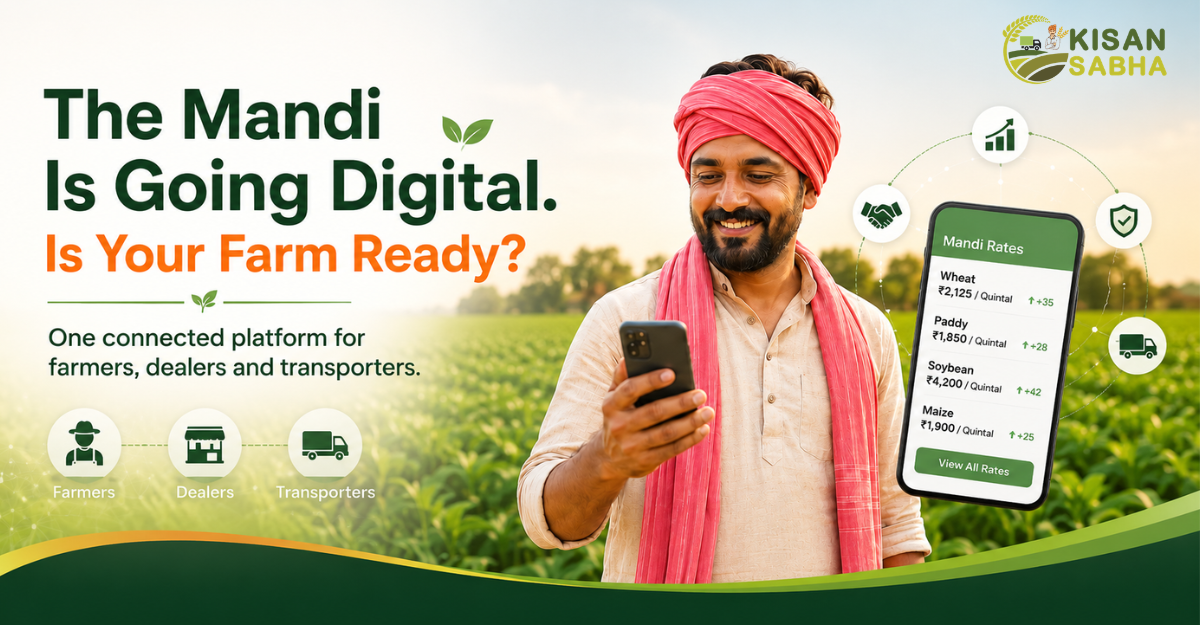
A mandi startup is a digital platform that lets farmers sell their produce directly to dealers, traders, and buyers online, without depending entirely on the local physical mandi. It replaces long queues, multiple middlemen, and price uncertainty with real-time listings, transparent rates, and faster payments. In short, it brings the mandi to a farmer’s phone instead of making the farmer travel to it.
This shift matters because India’s traditional mandi system, while still central to agricultural trade, has never been fully accessible to every farmer. A grower in a remote village often has only one or two nearby mandis to choose from, regardless of whether better prices exist elsewhere. A mandi startup removes that geographic limit.
Why Farmers Are Moving Beyond the Traditional Mandi System
The physical mandi has served Indian agriculture for decades, but it comes with real friction points that farmers deal with every harvest season.
- Limited buyer choice: a farmer is usually restricted to whichever traders show up at the local mandi that day.
- Multiple layers of middlemen: each layer takes a cut, so the price a farmer receives is often far lower than what the end buyer pays.
- Delayed payments: cash settlement can take days, which hurts farmers who need money quickly for the next sowing cycle.
- No visibility into demand elsewhere: a farmer in Maharashtra has no easy way to know that a dealer in Punjab is paying more for the same crop.
- Transport uncertainty: arranging a reliable truck for the harvest is often as stressful as selling it.
A mandi startup is built specifically to solve these gaps using technology that most farmers already carry in their pocket, a smartphone.
How a Mandi Startup Actually Works
Most mandi startup platforms follow a similar core model, built around three simple steps.
- Farmers list their produce: crop type, quantity, quality, and expected price, directly through an app or website.
- Buyers and dealers browse and connect: traders across India can view live listings and reach out to farmers without a middleman filtering the deal.
- Logistics and payment are handled through the platform: transport is arranged through verified truck partners, and payment tracking keeps both sides accountable.
This structure means a wheat farmer in Madhya Pradesh can now negotiate with a buyer in Gujarat just as easily as with someone from the neighbouring village. You can check live mandi rates before deciding where to sell.
What Makes a Mandi Startup Different From a Regular Marketplace App
Not every agri-app qualifies as a true mandi startup. The defining features usually include:
- Direct farmer-to-dealer connection, cutting out unnecessary intermediaries
- Real-time mandi rate updates so farmers know current prices before they sell
- Pan-India reach, letting a farmer sell outside their local district or state
- Integrated transport booking, since selling a crop is only half the job; getting it delivered is the other half
- Verified stakeholders, including registered dealers, transporters, and service providers, which builds trust on both sides
How KisanSabha Works as a Mandi Startup
KisanSabha is built around this exact problem: connecting farmers, mandi dealers, and transporters on one platform so that trade doesn’t stop at the boundary of the nearest mandi.
For farmers, the platform offers direct access to dealers across India, real-time mandi rate visibility, and transport booking so a sale doesn’t fall apart over logistics. Because deals happen directly with buyers, farmers keep more of the final price instead of losing margin to multiple middlemen.
For dealers, KisanSabha opens access to a wider and more consistent supply of produce, along with real-time market updates that help with sourcing decisions. Instead of relying only on local relationships, a dealer can source wheat, pulses, spices, fruits, or vegetables from farmers anywhere in the country.
For transporters, the platform connects available trucks with farmers and dealers who need reliable delivery, closing the loop between selling a crop and actually getting it to market. See the agri logistics network for details.
This three-sided network of farmers, dealers, and transporters is what separates a functioning mandi startup from a simple listings website. It’s also part of a broader shift toward agritech startups reshaping Indian farming.
Getting Started on a Mandi Startup Platform
Joining a platform like KisanSabha typically takes just a few steps:
- Download the app or visit the website
- Register as a farmer, dealer, or transporter
- Complete basic verification
- Start posting produce, browsing buy leads, or booking loads
There’s no complicated paperwork involved for a farmer to begin. The process is designed to work even for someone using a smartphone for agricultural trade for the first time.
Frequently Asked Questions
A mandi startup is an online platform that connects farmers directly with buyers, dealers, and transporters, allowing crop sales to happen without relying only on the local physical mandi.
A traditional mandi is a physical location with limited buyers and set operating hours. A mandi startup operates digitally, giving farmers access to buyers across India, real-time price information, and integrated transport, all through an app or website.
No. Most mandi startup platforms, including KisanSabha, are designed for simple use. A farmer only needs to register, list their crop details, and connect with interested buyers.
Yes. By connecting farmers directly with dealers and removing several layers of middlemen, mandi startups typically help farmers retain a larger share of the final sale price.
Most mandi startup platforms support a wide range of produce, including grains, pulses, spices, fruits, vegetables, and other agricultural commodities, depending on what the farmer wants to list and what dealers are sourcing.
The Bottom Line
A mandi startup doesn’t replace the mandi system. It extends it. Farmers still sell their produce and dealers still buy it, but the process becomes faster, more transparent, and no longer limited by geography. Platforms like KisanSabha are built to make that shift practical for farmers, dealers, and transporters across India, all from a single connected network.