

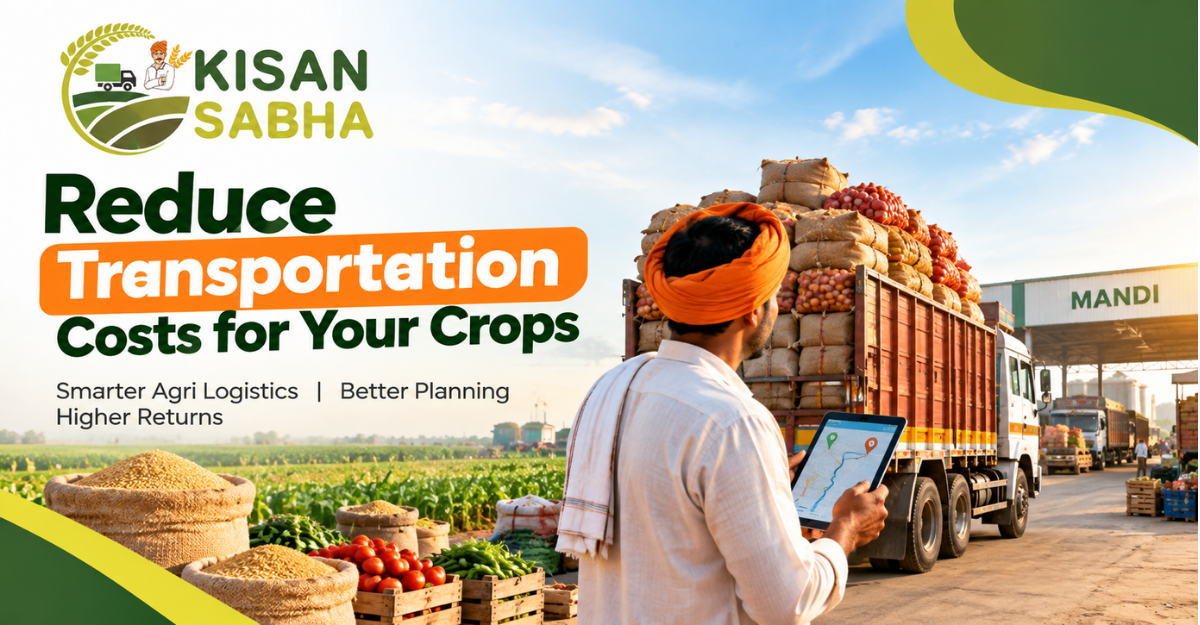
ing costs, involves an unsuitable vehicle or cannot meet the delivery schedule.
The goal is to compare the total delivery cost, not just the initial freight quote.
8 Ways to Reduce Transportation Costs in India
1. Compare Truck Quotes Before Booking
Farmers sometimes arrange transport through the first available local contact. This may be convenient, but it does not always reveal whether the quoted price is competitive.
Before booking, ask suitable transporters for comparable quotations.
Share the same information with each transporter:
- Pickup and delivery locations
- Commodity and total weight
- Required truck type
- Loading and unloading arrangements
- Pickup date and expected delivery time
- Toll charges and any additional fees
Compare quotations on the same basis. Ask whether the price includes loading, unloading, tolls, waiting time and other applicable charges.
Kisan Sabha’s Agri Logistics service is designed to connect agricultural stakeholders with transportation options. Use available information to assess suitable offers before confirming a booking.
2. Choose the Right Truck for Your Crop
The largest truck is not necessarily the most economical choice.
A farmer transporting a small quantity of vegetables may need a different vehicle from an FPO moving a full load of wheat or paddy. The vehicle must suit the cargo’s weight, volume, handling requirements and delivery conditions.
Consider the following before booking:
- Wheat, rice and mustard: Check payload capacity, safe loading and protection from moisture.
- Potatoes and onions: Consider ventilation, stacking and protection against physical damage.
- Tomatoes and other delicate vegetables: Prioritise suitable crates, careful handling and timely delivery.
- Long-distance perishable shipments: Assess whether temperature-controlled transport is necessary for the particular commodity and journey.
Never overload a truck to reduce the apparent cost per trip. Overloading can create safety risks, legal problems and cargo damage.
The right vehicle balances capacity, cargo protection, availability and total freight charges.
3. Consolidate Loads Where Practical
Small shipments can carry a high transportation cost per unit because many trip expenses remain similar regardless of the quantity moved.
Where timing, crop compatibility and buyer requirements permit, farmers can coordinate deliveries with neighbouring farmers, a cooperative or an FPO.
For example, three farmers growing compatible, non-perishable produce may explore combining their shipments to a common destination. They should compare the combined cost against separate truck bookings before deciding.
Load consolidation works best when participants agree on:
- The total quantity and weight
- Collection points and pickup timings
- Each participant’s share of the freight
- Loading order and unloading arrangements
- Responsibility for delays, damage and payment
Do not combine incompatible commodities or mix loads in a way that risks contamination, damage or quality disputes. For fresh produce, extra collection stops may also increase travel time and spoilage risk.
4. Plan Routes and Delivery Schedules
Route planning helps farmers and transporters avoid unnecessary distance, delays and repeated trips.
Before dispatch, confirm the pickup location, delivery point, preferred route, road restrictions and likely traffic conditions. For longer trips, check whether tolls and route-related expenses materially change the cost.
Whenever possible, coordinate harvesting, packaging, vehicle availability and buyer readiness. A truck that arrives before produce is ready may wait unnecessarily. Similarly, produce that reaches a mandi after a buyer’s receiving window may face further delays.
Use a freight or distance calculator as a planning aid. Treat estimates as estimates, then confirm the actual route and applicable charges with the transporter.
KisanSabha provides a mandi rates and transportation information page where users can explore relevant market and transportation fields.
5. Check Mandi Prices Before Choosing a Destination
A higher selling price at a distant mandi does not automatically mean a better return.
Farmers should compare the expected sale proceeds with transport and other selling expenses before selecting a destination.
A simple comparison should include:
- Expected selling price at each market.
- Quantity likely to be accepted by the buyer.
- Freight and loading or unloading charges.
- Market-related fees and other applicable costs.
- Expected deductions for quality, if any.
- Travel time and the risk of deterioration.
The Government of India’se-NAM trading details and Agmarknet price dashboard are useful starting points for checking available market-price information.
Remember that displayed prices may differ from the price you actually receive. Check the date, commodity variety, quality, quantity and local market conditions before making a decision.
6. Reduce Waiting and Loading Delays
Time spent waiting can affect both farmers and transporters. Depending on the booking terms, delays may lead to additional charges or disrupt the next delivery.
Prepare the shipment before the truck arrives.
- Sort, grade and package the produce as required.
- Keep the loading area accessible.
- Confirm labour availability.
- Complete weighing and paperwork in advance where possible.
- Share the exact pickup location and contact details.
- Ensure the buyer is ready to receive the shipment.
For a mandi dealer or warehouse operator handling multiple deliveries, a simple loading schedule can prevent several vehicles from arriving at the same time.
Confirm waiting-time rules with the transporter before booking. Clear arrangements help prevent misunderstandings later.
7. Find Return Loads and Improve Vehicle Use
Transporters often need to consider what happens after a delivery. If a truck travels back without cargo, the operator still incurs expenses associated with the return journey.
Finding a suitable return load can improve vehicle utilisation and may create opportunities for more competitive freight quotations. However, a return load must fit the vehicle, route, timing and cargo requirements.
Farmers and dealers can help by sharing accurate load details early, including destination, quantity, commodity and expected dispatch date.
Digital load-posting and transporter-discovery services can help connect transport demand with available vehicles. KisanSabha’s Agri Logistics platform is intended to connect farmers, transporters and other agricultural stakeholders.
A return load does not guarantee a lower rate. The final price depends on route, availability, timing and the terms agreed between the parties.
8. Protect Produce and Choose Suitable Storage
The cheapest trip may become expensive if the produce arrives damaged or loses quality.
For fruits and vegetables, harvest timing, sorting, packaging, ventilation and temperature requirements can influence the condition of the cargo on arrival. Cereals and pulses also need suitable protection from moisture and contamination.
Farmers should choose packaging and handling practices appropriate to the crop. Where immediate sale is not necessary, suitable storage may also be worth evaluating.
However, storage is not automatically cheaper than immediate transport and sale. Compare storage fees, handling charges, financing needs, expected market conditions and the risk of quality loss.
The Indian Council of Agricultural Research has published work on post-harvest handling, including guidance and research on custard apple handling and transportation. The specific methods used should match the commodity and local conditions.
How KisanSabha Supports Agri Logistics in India
KisanSabha connects agricultural stakeholders, including farmers, mandi dealers, transporters, buyers and agricultural service providers. Its Agri Logistics service focuses on helping users coordinate agricultural transportation and connect with relevant transport options.
The platform can support transport planning through features such as:
- Truck and load connections: Share transportation requirements and discover relevant opportunities.
- Freight planning: Use available freight-calculation facilities to estimate costs.
- Distance information: Review route-distance information as part of shipment planning.
- Mandi information: Explore market-related information before deciding where to send produce.
- Stakeholder connections: Find relevant participants across the agricultural supply chain.
These tools can support better decisions, but actual freight prices, truck availability, delivery timing and savings depend on the shipment and the terms offered by transport providers. Confirm the details before committing.
Planning a crop shipment? Visit KisanSabha Agri Logistics to explore transportation options for your agricultural business.
Transportation Cost Checklist for Farmers and FPOs
Before booking your next truck, check each item below.
- Compare quotations using the same shipment details.
- Confirm the total weight and vehicle capacity.
- Choose a vehicle suitable for the commodity.
- Compare the expected selling price at the destination with all selling costs.
- Confirm loading, unloading, tolls and waiting charges.
- Prepare produce and documents before pickup.
- Check the buyer’s delivery window.
- Use suitable packaging and handling methods.
- Record the final freight bill and delivered quantity.
- Review the cost per kilogram or tonne after delivery.
Keep the completed checklist with your shipment records. Over time, these records can help you compare transporters, routes and seasonal costs more accurately.
FAQs: Agri Logistics and Transportation Costs
1. How can farmers reduce transportation costs in India?
Farmers can reduce transportation costs by comparing truck quotations, selecting a suitable vehicle, planning efficient routes and coordinating shipments where practical. They should also confirm loading, unloading, tolls and waiting charges in advance. Checking mandi prices before dispatch helps farmers evaluate whether the expected selling price justifies the complete delivery cost.
2. What is agri logistics in India?
Agri logistics in India refers to the planning and movement of agricultural produce from farms and collection centres to mandis, warehouses, processors, retailers and buyers. It includes transportation, load planning, storage, handling and delivery coordination. Efficient agri logistics helps stakeholders organise shipments and make better-informed decisions about time, cost and crop quality.
3. How do I calculate freight charges for agricultural produce?
Add the truck freight, loading, unloading, tolls and other applicable charges to estimate the total transportation cost. Divide this amount by the net quantity transported to calculate the cost per kilogram or tonne. Compare quotations using the same assumptions and confirm whether each charge is included before booking.
4. How can farmers find trucks for crop transportation?
Farmers can contact local transporters, seek quotations from multiple providers or use digital agri logistics platforms. When requesting a truck, share the pickup location, destination, commodity, weight, vehicle requirements and dispatch date. Confirm the final rate, vehicle suitability, delivery schedule and payment terms before the shipment begins.
5. Can combining agricultural loads reduce freight costs?
Combining loads can reduce the transportation cost per unit when compatible produce shares a route and vehicle capacity is used efficiently. However, collection stops, extra handling, scheduling conflicts and cargo compatibility must be considered. Farmers should compare the combined quotation with separate bookings and agree on cost sharing before dispatch.
6. How does KisanSabha help with agricultural transportation?
KisanSabha connects farmers, transporters, mandi dealers and other agricultural stakeholders through its digital marketplace. Its Agri Logistics service supports transport connections and shipment planning, while its website offers mandi and freight-related information. Users should confirm current service availability, quotations, booking conditions and delivery arrangements directly before relying on them.
7. Should farmers choose the nearest mandi to save on transport?
Not always. A nearby mandi may reduce freight costs, but the selling price, buyer demand, quality requirements and other market expenses also matter. Compare the expected net proceeds from suitable destinations after accounting for transportation and selling costs. Use current market information as a guide, not as a guaranteed selling price.
6. Conclusion: Make Every Crop Delivery Count
Reducing transportation costs starts with better planning. Farmers, FPOs, mandi dealers and transporters can make more informed decisions by comparing quotations, choosing suitable vehicles, coordinating loads, checking market prices and preventing avoidable delays.
Agri logistics in India is not only about moving crops from one place to another. It is about coordinating the journey so that transportation costs, delivery timing and produce quality are considered together.
KisanSabha helps connect agricultural stakeholders and provides logistics-related tools to support this process.
Ready to plan your next crop shipment? Visit KisanSabha Agri Logistics, explore the available options and contact the team at +91-8181-08-00-00 or info@kisansabha.in for assistance.