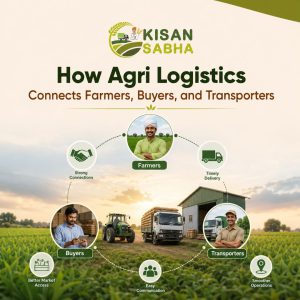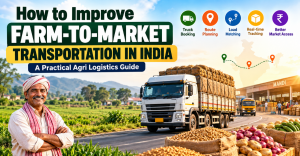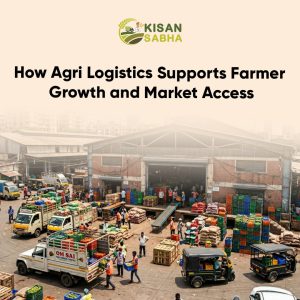

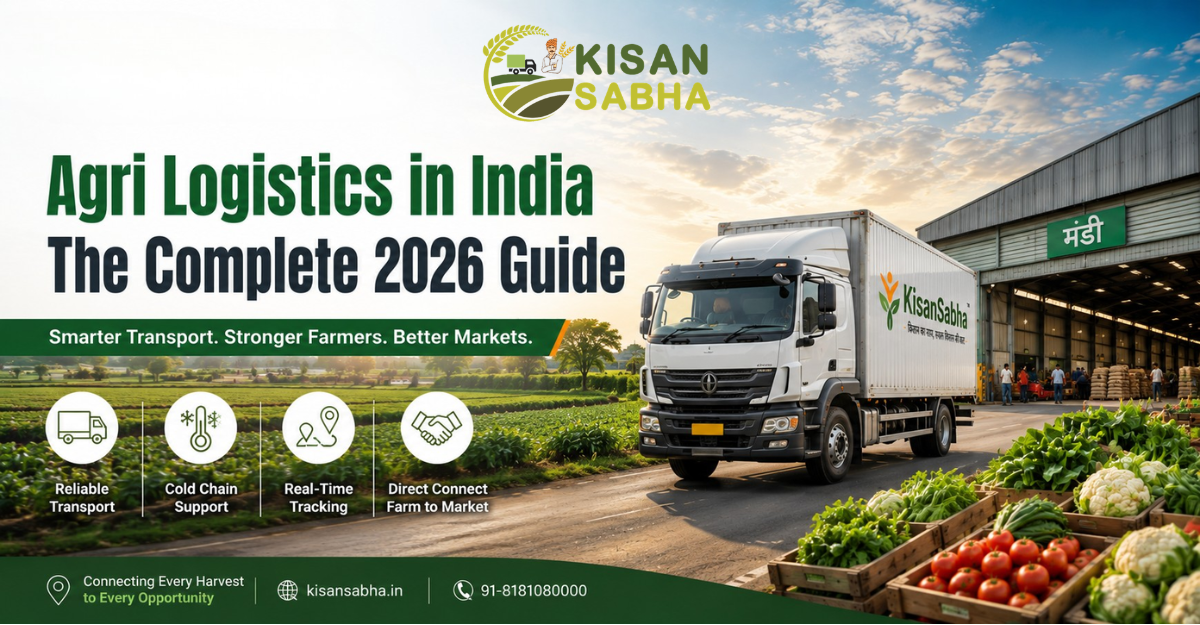
Agri logistics is the complete process of transporting, storing, managing, and delivering agricultural produce from farms to markets, warehouses, and buyers. In India, delays, poor transportation, and inadequate storage can lead to significant post harvest losses. Digital platforms such as KisanSabha are helping address these challenges by connecting farmers, transporters, and dealers through a single digital network.
What Is Agri Logistics?
Agri logistics, also known as agricultural logistics, refers to the planning, transportation, storage, and delivery of agricultural products from the point of harvest to markets, warehouses, processing centers, and final buyers.
It includes several important activities such as truck booking, route planning, cold storage, load matching, shipment tracking, freight calculation, and payment settlement between farmers, transporters, dealers, and buyers.
Agricultural logistics is different from regular freight transportation because farm produce is often perishable and must be moved within a limited time. Harvest seasons are also short, while demand can change quickly depending on the region and season. As a result, speed, coordination, reliability, and proper handling are essential.
Why Agri Logistics Matters for Indian Agriculture
Agriculture has unique transportation requirements. Fresh produce can lose quality quickly, harvest periods can be limited, and market demand can change from one region to another.
For farmers, efficient agri logistics can make the difference between reaching a profitable market on time and losing part of the crop because of delays or poor handling.
A weak agricultural logistics system can lead to:
- Crop spoilage: Delayed pickups and unsuitable vehicles can reduce the quality of agricultural produce.
- Higher transportation costs: Empty return trips and dependence on intermediaries can increase freight expenses.
- Difficulty finding reliable transporters: Farmers may struggle to arrange suitable vehicles at short notice.
- Long waiting periods: Delays between harvesting, loading, and dispatch can affect product quality.
- Payment delays: Poor coordination can create disputes and delays between farmers, transporters, and buyers.
These challenges have existed for years. The difference today is that digital technology can help farmers and businesses coordinate transportation more efficiently.
Government Initiatives Supporting Agri Logistics in India
Agri logistics is not only a private sector requirement. Several government initiatives have also focused on improving agricultural transportation and market connectivity.
The Kisan Rath mobile app helps farmers, Farmer Producer Organisations, and traders find vehicles for transporting agricultural produce. It is also connected with the e-NAM platform for trader load requirements.
Indian Railways operates Kisan Rail services on various routes to support the transportation of fruits, vegetables, and other perishable agricultural products.
Government schemes such as PMFBY, or Pradhan Mantri Fasal Bima Yojana, also support farmers by reducing certain agricultural risks. Better logistics combined with risk management can help create a more reliable agricultural supply chain.
These initiatives show the growing focus on organized agricultural logistics and better connectivity between farms, markets, and buyers. Digital platforms such as KisanSabha can complement this ecosystem by helping address transportation requirements at the ground level.
Common Agri Logistics Challenges Farmers Face
Moving agricultural produce from a farm to the market can still be difficult for many farmers.
Finding a truck at short notice can be challenging, particularly during busy harvest periods. Transportation rates may also vary depending on availability, location, and local contacts. Once a vehicle leaves the farm, farmers may have limited visibility into the shipment until it reaches its destination.
Transporters face a different set of challenges. Agricultural loads may not be available consistently, return trips can remain empty, and payment settlements may take time.
This fragmented system creates inefficiencies for both farmers and transporters. When transportation is not properly coordinated, costs increase and valuable time is lost.
How Digital Agri Logistics Platforms Solve These Problems
Digital agri logistics platforms are helping create a more connected agricultural transportation ecosystem.
Platforms such as KisanSabha connect farmers, transporters, and dealers through a digital agricultural transport network. Instead of depending entirely on personal contacts or local agents, users can manage important transportation activities online.
1. Truck and Load Matching
Farmers can post a load or find a truck based on their transportation requirements.
This can make it easier to connect agricultural loads with transporters who are available to move them.
2. Transparent Pricing
Getting quotes from multiple transporters can give farmers more information before selecting a transportation option.
KisanSabha also provides a freight calculator to help users understand transportation costs and plan their shipments more effectively.
3. Shipment Tracking
Real time tracking can provide better visibility after a shipment has been dispatched.
Instead of repeatedly calling the transporter for updates, farmers and dealers can use digital tracking tools to monitor the movement of their goods.
4. Fewer Empty Return Trips
Efficient load matching can help transporters find additional loads for return journeys.
Reducing empty trips can improve vehicle utilization and help lower transportation costs across the supply chain.
5. Better Payment Coordination
A transparent digital process can help reduce misunderstandings between farmers, transporters, and buyers.
Clear payment processes can also improve trust and make it easier for users to work with transportation partners.
Agri Logistics vs. Traditional Farm Transport
| Factor | Traditional Transport | Digital Agri Logistics |
| Truck availability | Depends heavily on local contacts | Access to a connected transporter network |
| Pricing | Often negotiated and difficult to compare | Multiple quotes and better price visibility |
| Tracking | Limited visibility after dispatch | Real time shipment tracking |
| Payments | Can involve delays and disputes | More organized payment coordination |
| Return trips | Often empty | Can be optimized through load matching |
Who Benefits from Better Agri Logistics?
Farmers
Farmers can benefit from easier access to transporters, competitive transportation options, better shipment visibility, and vehicles suitable for different types of agricultural produce.
Better logistics can also help reduce delays and protect the value of harvested crops.
Transporters
Transporters can get access to more agricultural loads and improve vehicle utilization.
Better load matching can help reduce empty return journeys and create opportunities for transporters to build a stronger business reputation.
Dealers and Buyers
Dealers and buyers can benefit from more predictable transportation, improved shipment visibility, and better coordination with transporters.
A more organized logistics process can also reduce unnecessary intermediaries and improve supply chain efficiency.
Final Thoughts on Agri Logistics in India
Agri logistics is about much more than moving agricultural goods from one location to another. It involves coordinating farmers, transporters, dealers, buyers, vehicles, routes, storage, pricing, and payments.
As agriculture becomes increasingly connected through digital technology, farmers and businesses have more opportunities to manage transportation efficiently.
KisanSabha brings farmers, transporters, and dealers together through a digital agricultural logistics network. By improving access to transportation, pricing information, load matching, and shipment visibility, digital logistics can help create a more efficient farm to market supply chain.
If you are a farmer, transporter, or dealer looking for a simpler way to manage agricultural transportation, you can register free on KisanSabha and explore its digital logistics services.
FAQs on Agri Logistics
Agri logistics refers to the transportation, storage, and distribution of agricultural products from farms to markets, warehouses, processing centers, and final buyers.
Efficient agri logistics helps reduce delays, minimize post harvest losses, improve transportation efficiency, and connect farmers with markets more effectively.
KisanSabha connects farmers, transporters, and dealers through a digital platform. It provides services such as truck booking, load posting, transporter discovery, freight calculation, and shipment tracking.
No. Agri logistics includes several activities beyond transportation, including warehousing, cold storage, load matching, route planning, freight calculation, shipment tracking, and payment coordination.
You can register on KisanSabha, post your load details, provide information such as destination and load requirements, review available transportation options, and coordinate with suitable transporters.
Important initiatives include the Kisan Rath app for agricultural vehicle hiring, its connection with the e-NAM ecosystem, and Kisan Rail services operated by Indian Railways for transporting agricultural and perishable products.
The Future of Agri Logistics
Agri logistics will continue to evolve as more farmers, transporters, dealers, and buyers adopt digital platforms.
The fundamental goal remains simple: reduce waste, improve transportation efficiency, provide better price visibility, and create a supply chain that farmers and businesses can trust.
Whether you are arranging your first agricultural shipment or managing transportation regularly, KisanSabha is designed to make the farm to market transportation process more organized and accessible.