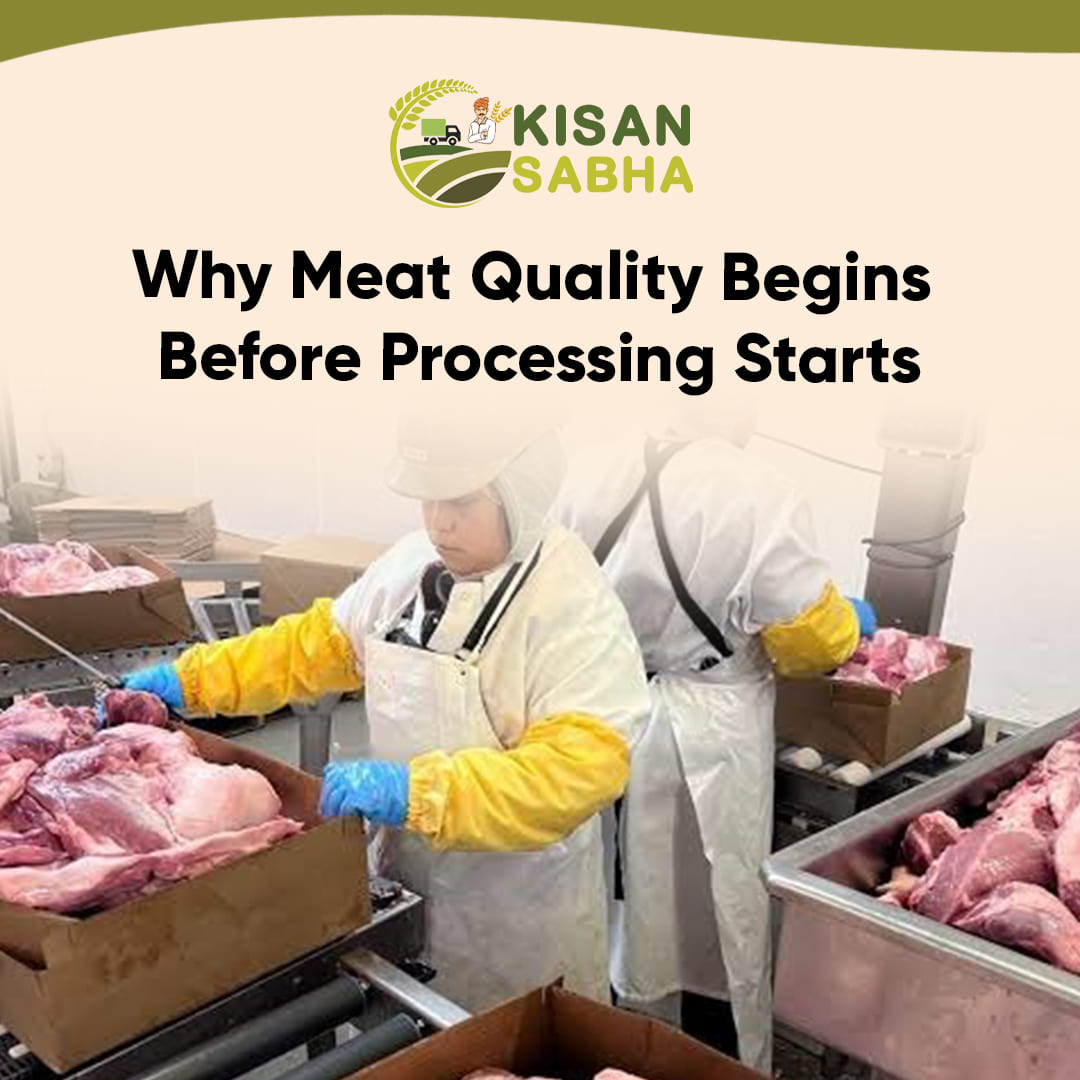
When people think about meat quality, they often focus on processing, packaging, or storage. However, the quality of meat begins much earlier—on the farm. Healthy livestock, proper nutrition, stress-free handling, and hygienic transportation all play an important role in determining the quality and safety of meat before it reaches a processing facility.
According to the Food Safety and Standards Authority of India (FSSAI) and the World Organisation for Animal Health (WOAH), good animal health, welfare, and hygienic handling before slaughter are essential for producing safe, high-quality meat.
In this guide, we’ll explore why meat quality starts long before processing and how farmers, buyers, and businesses can benefit from following best practices.
What Does Meat Quality Mean?
Meat quality is more than appearance. It includes several characteristics that influence consumer satisfaction and food safety, such as:
- Freshness
- Texture
- Colour
- Tenderness
- Juiciness
- Flavour
- Hygiene and safety
FSSAI notes that consumers often judge meat quality based on these visible and sensory attributes.
Why Quality Starts on the Farm
A healthy animal is the foundation of quality meat. Good farming practices help reduce health risks and improve the overall quality of the final product.
Farmers should focus on:
- Balanced nutrition
- Clean drinking water
- Proper housing
- Regular veterinary care
- Disease prevention
- Clean farm environment
Healthy animals are more likely to produce meat that meets food safety and quality expectations.
Animal Welfare Matters
Animal welfare is not only an ethical responsibility but also an important factor in meat quality.
According to FSSAI, animals should be handled, transported, and managed using humane practices. Rough handling, overcrowding, or unnecessary stress can negatively affect meat quality and increase losses.
Good animal welfare practices include:
- Gentle handling
- Comfortable transportation
- Adequate rest before slaughter
- Access to clean water
- Avoiding overcrowding
These practices support both animal well-being and product quality.
Nutrition Plays a Key Role
Proper feeding helps livestock grow efficiently and remain healthy.
A balanced diet supports:
- Healthy growth
- Better body condition
- Improved muscle development
- Strong immune system
Farmers should provide feed that matches the nutritional needs of the species and production stage while ensuring continuous access to clean drinking water.
Disease Prevention Protects Meat Quality
Preventing disease is easier than treating it.
Regular health monitoring helps farmers identify problems early and reduce the risk of disease spreading within the herd or flock.
Good health management includes:
- Vaccination as recommended by veterinarians
- Routine health checks
- Clean housing
- Proper sanitation
- Biosecurity measures
Healthy livestock contributes to safer food production and reduces economic losses.
Safe Transportation Makes a Difference
The journey from the farm to the processing facility also affects meat quality.
Poor transportation practices can increase stress, physical injuries, and quality losses.
FSSAI recommends careful loading, unloading, transportation, and handling to minimize stress and improve meat quality.
Good transportation practices include:
- Avoiding overcrowding
- Providing adequate ventilation
- Reducing travel stress
- Handling animals calmly
- Using clean transport vehicles
Hygiene Before Processing is Essential
Maintaining hygiene before processing helps reduce contamination risks.
Important practices include:
- Keeping animals clean
- Maintaining clean holding areas
- Using hygienic equipment
- Following sanitation protocols
Food safety begins with good hygiene throughout the supply chain—not just inside the processing plant.
Building Strong Market Connections
Producing quality livestock is only one part of a successful meat business. Farmers also need access to reliable buyers who value quality and responsible farming practices.
KisanSabha helps connect livestock farmers with wholesalers, retailers, processors, restaurants, and other business buyers through its digital marketplace.
Instead of relying only on local markets, farmers can explore wider business opportunities and connect with buyers looking for quality livestock and agricultural products. Better market access can support long-term business growth while creating a stronger connection between producers and buyers.
Quality Starts Long Before Processing
High-quality meat is the result of good farming practices, responsible animal care, and proper handling throughout the supply chain. Processing is important, but it cannot replace the benefits of healthy livestock, good nutrition, hygienic management, and stress-free transportation.
As consumers and businesses increasingly value food safety and quality, farmers who follow best practices are better positioned to build trust and access wider markets. Platforms like KisanSabha support this journey by connecting producers with buyers and helping create a more organized and transparent meat supply chain.