
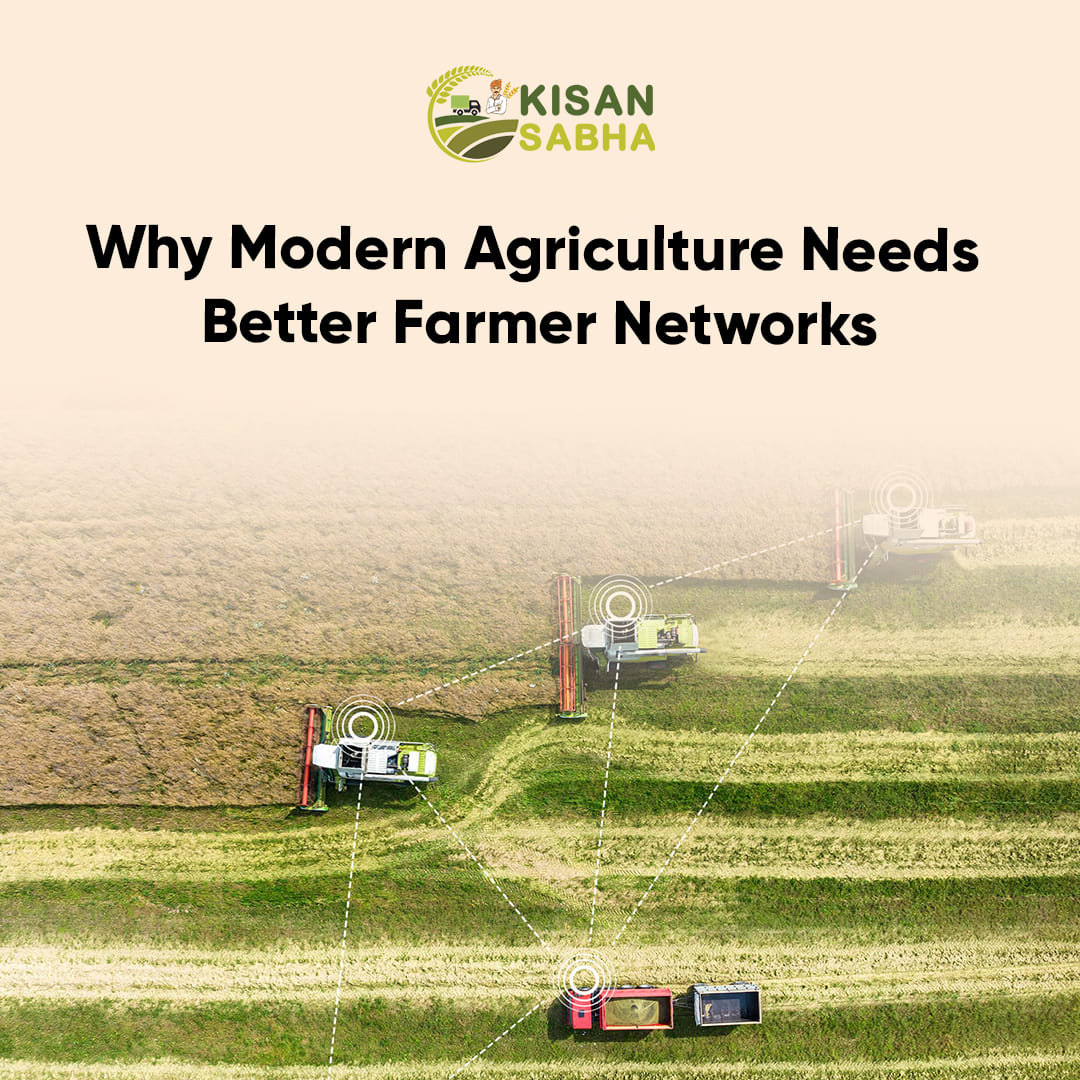
Modern agriculture is changing rapidly. Farmers today face challenges like rising input costs, climate change, market uncertainty, supply chain gaps, and limited access to real-time information.
In this changing environment, strong farmer networks are becoming more important than ever.
Farmer networks help farmers connect with buyers, transporters, experts, agribusinesses, and other farmers. These networks improve communication, increase market access, and support better decision-making.
Studies show that organized farmer groups and digital farmer networks improve collaboration, strengthen supply chains, and help farmers access better market opportunities.
What are Farmer Networks in Agriculture?
Farmer networks are systems or platforms where farmers connect with:
- Other farmers
- Buyers and traders
- Transporters
- Agribusinesses
- Agricultural experts
- Digital marketplaces
These networks may work through:
- Farmer-Producer Organizations (FPOs)
- Mobile apps
- Digital agriculture platforms
- Online agriculture communities
Their goal is to improve coordination, knowledge sharing, and market connectivity.
Why Better Farmer Networks are Important in Modern Agriculture
1. Better Market Access for Farmers
One of the biggest challenges for farmers is finding reliable buyers and fair prices.
Strong farmer networks:
- Connect farmers directly with buyers
- Reduce dependency on middlemen
- Improve price discovery
Research on Farmer-Producer Organizations (FPOs) in India shows that organized farmer linkages improve agribusiness connections and market integration.
2. Faster Information Sharing
Agriculture depends heavily on timely information.
Farmer networks help share:
- Market prices
- Weather updates
- Crop advisory
- Government schemes
- Farming techniques
Digital agriculture systems are helping farmers access faster and more reliable information through connected platforms.
3. Stronger Supply Chains and Logistics
Modern agriculture requires efficient movement of goods from farms to markets.
Better farmer networks improve:
- Transportation coordination
- Storage planning
- Delivery management
- Supply chain visibility
Collaborative agricultural systems are improving sustainability and efficiency across food supply chains.
4. Collective Strength for Small Farmers
India has millions of small and marginal farmers who often struggle individually.
Farmer networks help them:
- Work collectively
- Increase bargaining power
- Access bulk buyers
- Share resources and knowledge
Studies show that farmer collectivization plays a major role in improving agricultural growth and sustainability.
5. Improved Adoption of Technology
Technology adoption becomes easier when farmers are connected through networks.
Farmer communities help spread awareness about:
- Digital marketplaces
- AI-based farming tools
- Smart irrigation systems
- Precision agriculture
Research highlights that digital inclusion and governance significantly influence technology adoption in agriculture networks and FPOs.
6. Better Support During Climate Challenges
Climate change is affecting farming across India.
Connected farmer networks help farmers:
- Share climate-related information
- Learn adaptive farming methods
- Access expert guidance quickly
Research on smart connected farms shows that networked farmers are better prepared to handle climate-related agricultural risks.
7. Increased Trust and Collaboration
Agriculture works better when stakeholders are connected.
Strong farmer networks improve:
- Trust among farmers and buyers
- Collaboration across the supply chain
- Long-term business relationships
Research on successful FPOs in India shows that trust, leadership, and governance are key factors behind strong agricultural networks.
8. Digital Platforms Are Expanding Farmer Networks
Digital agriculture platforms are now making networking easier than ever.
Platforms allow farmers to:
- Connect beyond local mandis
- Reach new buyers
- Find logistics support
- Build business connections online
9. Farmer Networks Support Rural Growth
Strong agricultural networks not only help farmers, but they also strengthen rural economies.
Connected farming ecosystems create:
- Better rural employment
- Stronger value chains
- Improved financial opportunities
Digital agriculture is increasingly seen as a major contributor to smart villages and rural development.
10. The Future of Agriculture Is Collaborative
Modern agriculture is moving towards connected ecosystems instead of isolated farming.
The future will depend on:
- Digital collaboration
- Data sharing
- Community-driven agriculture
- Integrated supply chains
Experts believe that networked farmers and connected agricultural systems will play a major role in improving productivity and sustainability.
Also Read:- Why Agritech Startups Are Growing Rapidly in India’s Agriculture Sector
Challenges Without Strong Farmer Networks
Without proper networks:
- Farmers remain dependent on local middlemen
- Market access stays limited
- Logistics become inefficient
- Technology adoption slows down
- Information gaps increase
This limits growth opportunities for both farmers and agribusinesses.
A Smarter Way to Connect Agriculture Stakeholders
In today’s digital agriculture landscape, strong farmer networks are becoming essential for better growth, communication, and market access. Platforms like KisanSabha are helping bridge the gap between farmers and other important stakeholders in the agriculture supply chain.
KisanSabha supports the agriculture community by:
- Connecting farmers, buyers, dealers, and transporters on one platform
- Improving communication and coordination across agriculture trade
- Simplifying logistics and transportation management
- Helping farmers access better market opportunities
By creating a connected and transparent ecosystem, KisanSabha is contributing towards a smarter, faster, and more efficient future for agriculture in India.
The Future of Agriculture Depends on Strong Connections
Modern agriculture is no longer only about farming – it is about connectivity, collaboration, and access to opportunities.
Better farmer networks help farmers:
- Improve income opportunities
- Access better markets
- Reduce operational challenges
- Stay updated with modern agriculture trends
As agriculture becomes more digital and data-driven, connected platforms like KisanSabha can play an important role in helping farmers and agribusinesses grow together.
Frequently Asked Questions
Farmer networks improve market access, information sharing, logistics, and collaboration among farmers and buyers.
Digital platforms connect farmers with buyers, transporters, and agribusinesses, improving communication and efficiency.
The future is digital, collaborative, and technology-driven, with connected platforms playing a major role in agricultural growth.