

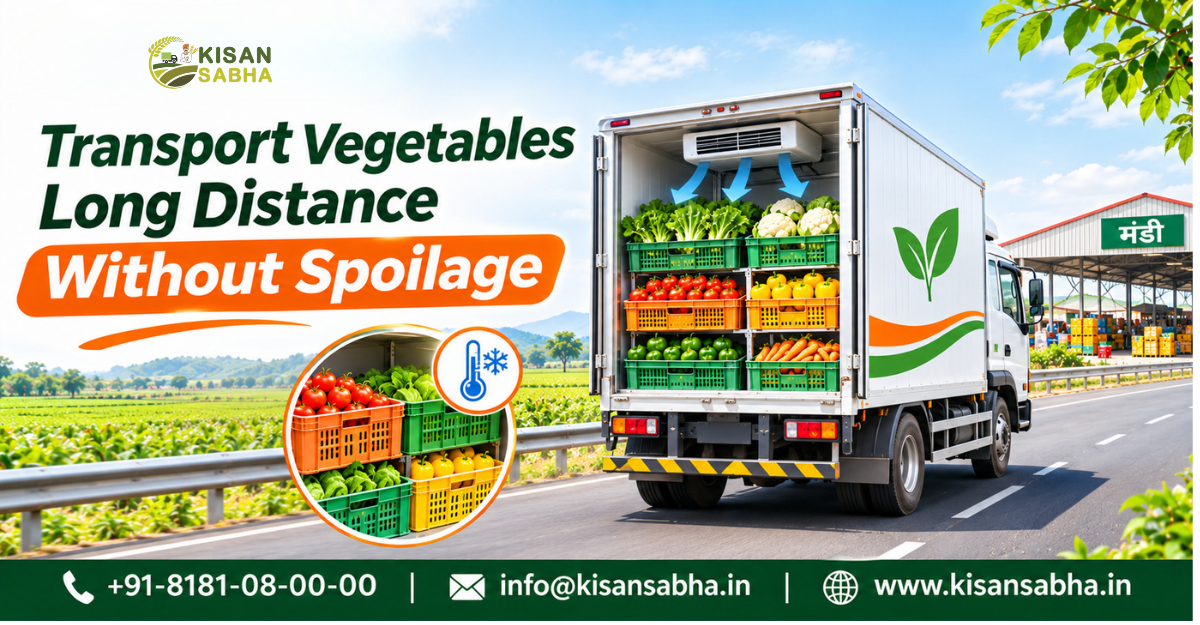
Transporting fresh vegetables over long distances is one of the biggest challenges in India’s agricultural supply chain. Farmers often work hard to produce high-quality crops, but poor handling, unsuitable packaging, excessive heat and transportation delays can reduce their market value before they reach buyers.
Whether you are a small farmer, an FPO, a vegetable wholesaler or an agricultural trader, choosing the right transportation method is essential for protecting produce quality and controlling logistics costs.
So, how can you transport vegetables over long distances while reducing spoilage and unnecessary expenses?
The answer lies in proper harvesting, post-harvest handling, suitable packaging, vehicle selection, route planning and reliable transportation arrangements.
In this guide, we explain 10 practical steps to help you move fresh vegetables safely from farms to mandis, wholesale markets, retailers and other destinations across India.
Why Is Long-Distance Transportation of Vegetables Challenging?
Unlike many non-perishable goods, fresh vegetables continue to undergo biological changes after harvesting. They lose moisture, produce heat through respiration and gradually lose freshness.
During transportation, several factors can accelerate deterioration:
- Temperature fluctuations: Excessive heat can increase moisture loss and shorten the usable life of fresh produce.
- Poor packaging: Inadequate protection can cause bruising, crushing and physical damage.
- Insufficient ventilation: Poor airflow may allow heat and moisture to accumulate inside the load.
- Transportation delays: Unexpected waiting periods can affect freshness and market quality.
- Improper loading: Excessive stacking pressure can damage vegetables in lower crates.
- Poor vehicle selection: An unsuitable vehicle may expose sensitive produce to environmental conditions that accelerate spoilage.
The best way to reduce these risks is to manage the entire process, starting immediately after harvesting.
10 Steps to Transport Vegetables Long Distance Safely
1. Choose the Right Market Before Harvesting
Before arranging transportation, identify where your vegetables will be sold.
Sending produce to a distant market without checking demand, selling prices and transportation expenses can reduce your profit.
Consider these factors before selecting a destination:
- Current vegetable prices in nearby and distant mandis.
- Expected transportation charges.
- Distance and estimated delivery time.
- Availability of buyers or wholesale traders.
- Expected loading, unloading and handling expenses.
- Potential losses during transportation.
Farmers can use the KisanSabha Mandi Rate service to explore market price information.
You can also use the Distance Calculator to assess route distance and the Freight Calculator to estimate transportation expenses.
Expert tip: Do not select a market based only on its higher selling price. Calculate the expected revenue after deducting transportation, handling and possible quality losses.
2. Harvest Vegetables at the Right Time
Harvesting conditions have a direct impact on the quality of vegetables during transportation.
Produce collected during excessive heat may carry additional field heat, increasing the cooling requirement and accelerating deterioration.
Follow these practices:
- Harvest during cooler morning or evening hours whenever practical.
- Avoid unnecessary exposure to direct sunlight after harvesting.
- Select vegetables at the appropriate maturity stage for their intended market and journey.
- Handle produce gently to prevent cuts, bruises and physical damage.
- Keep harvested vegetables under shade until they are sorted and packed.
- Avoid unnecessary harvesting and handling when produce is wet.
Different vegetables have different maturity requirements. Therefore, harvesting decisions should be based on crop-specific recommendations and the expected transportation duration.
3. Remove Field Heat and Sort the Produce
Post-harvest handling is an important part of vegetable supply chain management.
Once vegetables are harvested, they should be moved to a suitable shaded handling area. Where appropriate, pre-cooling or other recommended cooling methods can help remove field heat.
After harvesting, follow these steps:
Remove damaged vegetables: Separate produce with visible cuts, bruises, decay or disease symptoms.
Grade by quality and size: Group vegetables according to their size, maturity and market requirements.
Clean carefully: Remove loose soil, dry leaves and unwanted material. Washing should only be performed when appropriate for the crop, with suitable drying before packing.
Avoid unnecessary handling: Repeated movement increases the possibility of physical damage.
Remember that different vegetables require different post-harvest conditions. A handling method suitable for potatoes may not be suitable for leafy vegetables.
4. Use Suitable Packaging for Fresh Vegetables
Packaging protects vegetables against physical damage, pressure, contamination and unnecessary moisture loss.
Choosing suitable packaging is especially important when produce needs to travel hundreds of kilometres.
Recommended packaging practices include:
- Use clean, strong and appropriately ventilated crates.
- Select packaging according to vegetable size, weight and sensitivity.
- Avoid overfilling containers.
- Use suitable cushioning for vegetables that bruise easily.
- Maintain adequate ventilation during storage and transportation.
- Keep packaging clean and suitable for food handling.
- Label consignments with crop name, grade, weight and destination details.
For example, tomatoes and capsicums need protection against pressure and impact, while leafy vegetables require careful management of moisture loss and temperature.
Proper packaging helps maintain product quality and makes loading and unloading easier.
5. Select the Right Truck for Vegetable Transportation
Choosing an appropriate vehicle is one of the most important decisions when arranging long-distance agricultural transportation.
Not every vegetable requires the same transportation conditions. Vehicle selection should depend on the crop, quantity, distance, weather and expected delivery time.
| Vegetable category | Examples | Transportation considerations |
| Hardy vegetables | Potato, onion, pumpkin | Suitable ventilation and protection from weather |
| Soft vegetables | Tomato, brinjal, capsicum | Protective crates and careful stacking |
| Leafy vegetables | Spinach, coriander, mint | Short transit time and appropriate temperature management |
| Sensitive or premium produce | Specialty vegetables, cut produce | Crop-specific temperature control and suitable refrigerated transport |
When should you choose a refrigerated truck?
A refrigerated truck, also known as a reefer vehicle, is useful when the produce requires controlled temperatures throughout transportation.
However, refrigeration is not automatically necessary for every vegetable. Some crops may suffer chilling injury if exposed to temperatures below their recommended range.
Before booking a vehicle, confirm:
- Whether the crop requires temperature-controlled transportation.
- Whether the vehicle provides suitable ventilation.
- Whether the available truck capacity matches your shipment.
- Whether the journey duration is appropriate for the produce.
- Whether the vehicle is suitable for the expected weather conditions.
Selecting the right vehicle helps protect produce quality without spending unnecessarily on transportation.
6. Plan the Route and Delivery Schedule
Transportation planning is essential when vegetables are travelling from rural production areas to distant markets.
A poorly planned journey can increase fuel consumption, transportation expenses and product deterioration.
Consider these practices:
- Select a practical route based on road conditions and travel distance.
- Check for known traffic congestion and road restrictions.
- Avoid unnecessary stops during transportation.
- Plan departure and arrival according to market operating hours.
- Consider cooler travel periods during hot weather when appropriate.
- Coordinate with the receiving buyer before dispatch.
- Allow sufficient time for loading, unloading and driver rest.
For sensitive produce, shorter transit time and fewer handling points can be more important than choosing the cheapest freight option.
7. Load Vegetables Carefully Inside the Truck
Even when vegetables are harvested and packed properly, careless loading can damage the entire shipment.
Correct loading practices help maintain product quality throughout the journey.
Follow these guidelines:
- Place heavier crates at the bottom and lighter, more delicate crates above them.
- Stack containers evenly to distribute weight.
- Avoid excessive stacking pressure.
- Leave appropriate ventilation space wherever the vehicle and packaging design require it.
- Secure the load to prevent movement during braking and turning.
- Protect vegetables from direct sunlight and rain.
- Avoid placing produce against excessively hot surfaces.
- Separate commodities when their temperature, humidity or ethylene requirements are incompatible.
Never overload a vehicle beyond its permitted carrying capacity.
The objective is to transport vegetables in a stable arrangement that minimises movement, compression and unnecessary exposure to heat.
8. Keep Transportation Documents Ready
Proper documentation helps prevent avoidable problems during transportation.
Depending on the transaction, shipment and applicable regulations, the following documents may be required:
- Sales invoice or bill of supply, as applicable.
- Delivery challan, where relevant.
- E-way bill, where legally applicable.
- Vehicle registration details.
- Driver contact information.
- Buyer and seller details.
- Relevant mandi or market entry documents, where required.
Do vegetables require an e-way bill?
An e-way bill is not automatically required for every vegetable shipment. Its applicability depends on the nature of the goods, consignment, transaction and applicable GST provisions and exemptions.
Check the current requirements under the GST rules and applicable notifications before dispatch.
For additional information, visit KisanSabha’s e-Way Bill information guide.
9. Arrange Reliable Transportation Through KisanSabha
Finding a suitable truck at the right time can be challenging, particularly for farmers and small agricultural businesses that do not have their own transportation arrangements.
A digital load-booking platform can make it easier to connect shipment requirements with available transportation options.
With KisanSabha, users can explore online load-posting options for agricultural transportation.
The process is straightforward:
- Register on KisanSabha.
- Enter the pickup and destination locations.
- Select the commodity and shipment weight.
- Choose the appropriate truck or load category.
- Provide the scheduled pickup date and other shipment details.
- Submit the load information and proceed with the available booking process.
Full Load or Part Load: Which Option Should You Choose?
Your transportation choice should depend on shipment quantity and truck requirements.
- Full Load: Suitable for larger shipments that require a dedicated transportation arrangement. KisanSabha’s current load-posting page supports full-load requirements.
- Part Load: Suitable for smaller quantities that do not require a full truck. KisanSabha’s part-load page identifies part loads as below 3 MT and full loads as above 3 MT.
Explore the available options:
Compare transportation costs and confirm the vehicle, delivery schedule and agreed terms with the transporter before dispatch.
10. Inspect Vegetables After Delivery
The transportation process does not end when the truck reaches its destination.
A proper inspection helps identify damage, verify the shipment and improve future transportation decisions.
After delivery:
- Unload vegetables carefully.
- Move produce to an appropriate shaded or temperature-controlled area.
- Check the quantity and quality of the shipment.
- Compare the received quantity with the dispatch records.
- Photograph visible damage, if any.
- Record delays and other transportation issues.
- Confirm delivery and payment according to the agreed terms.
Maintaining shipment records helps farmers and traders understand where losses occur and how future transportation can be improved.
How to Reduce Vegetable Transportation Costs in India
Transportation expenses can significantly affect farmers’ earnings, especially when vegetables need to travel long distances.
Here are some practical ways to control logistics costs without compromising product quality.
Compare Multiple Transportation Quotes
Do not select a truck based only on the first available price. Compare vehicle suitability, freight charges, delivery time and other agreed expenses.
Choose Full Load or Part Load According to Quantity
If your shipment is small, arranging a full truck may increase your cost per unit.
A suitable part-load arrangement can help smaller farmers and traders manage transportation expenses.
Coordinate Shipments With Other Farmers
Farmers belonging to the same area or FPO can explore combining compatible shipments when timing, destination and handling requirements allow.
Plan Transportation in Advance
Last-minute truck arrangements may limit vehicle choices and increase costs during periods of high demand.
Reduce Post-Harvest Losses
Poor packaging, unnecessary delays and damaged produce can create financial losses beyond the freight charges.
Investing in proper handling can improve the overall profitability of a shipment.
Use Freight Estimation Tools
Before finalising a shipment, calculate the approximate transportation expense.
The KisanSabha Freight Calculator helps users estimate freight based on shipment and route details.
Remember that an estimated freight amount is not necessarily the final negotiated transportation price.
Common Mistakes to Avoid During Vegetable Transportation
Farmers and traders should avoid these common mistakes:
- Harvesting vegetables during excessive heat without proper handling.
- Leaving harvested produce exposed to direct sunlight.
- Using damaged or unsuitable packaging materials.
- Overfilling crates and containers.
- Selecting an unsuitable vehicle.
- Ignoring crop-specific temperature requirements.
- Overloading the truck.
- Failing to plan the delivery schedule.
- Sending produce without confirming the receiving buyer.
- Ignoring required transportation documents.
- Not checking the shipment after delivery.
Avoiding these mistakes can help reduce preventable damage and improve the efficiency of agricultural logistics.
Vegetable Transportation Checklist Before Dispatch
Use this checklist before sending vegetables to a distant market.
- Destination market and buyer confirmed.
- Vegetables harvested at the appropriate maturity.
- Produce protected from direct sunlight.
- Damaged and diseased vegetables separated.
- Produce sorted and graded.
- Suitable packaging and crates arranged.
- Vehicle selected according to crop requirements.
- Truck capacity and transportation arrangements confirmed.
- Route and delivery schedule planned.
- Shipment loaded and secured properly.
- Required documents prepared.
- Buyer and transporter contact details available.
- Shipment quantity and loading condition recorded.
Completing these checks before dispatch can help avoid unnecessary transportation problems.
Frequently Asked Questions About Long-Distance Vegetable Transportation
1. How can I transport vegetables long distance without spoilage?
Harvest vegetables at the right maturity, protect them from direct sunlight, remove field heat where appropriate, use suitable packaging and select a vehicle according to crop requirements. Proper route planning and timely delivery also help reduce spoilage.
2. Which truck is best for transporting fresh vegetables?
The best truck depends on the vegetable type, shipment quantity, distance and weather conditions. A suitable covered and ventilated vehicle may work for many vegetables, while certain sensitive crops require refrigerated transportation.
3. How can farmers reduce vegetable spoilage during transportation?
Farmers can reduce spoilage by using proper post-harvest handling, removing damaged produce, selecting suitable crates, avoiding excessive stacking and reducing unnecessary transportation delays.
4. Is a refrigerated truck necessary for transporting vegetables?
Not always. Refrigerated vehicles are useful for crops that require controlled temperature conditions. However, the correct temperature depends on the vegetable, as some crops are sensitive to excessive cooling.
5. How can I transport a small quantity of vegetables?
Farmers and small traders can explore part-load transportation instead of arranging a dedicated full truck. KisanSabha provides a part-load posting option for shipments below 3 MT.
6. How can I calculate vegetable transportation costs?
Transportation costs depend on distance, shipment weight, truck type, route conditions, season and other charges. You can use the KisanSabha Freight Calculator to estimate the expected freight before discussing the final price with a transporter.
7. What documents are required to transport vegetables in India?
Depending on the transaction and applicable rules, documents may include an invoice, delivery challan, vehicle details and an e-way bill where required. Always verify the applicable GST and state-level requirements before dispatch.
8. Why is proper packaging important for vegetable transportation?
Suitable packaging protects vegetables against bruising, crushing, contamination and excessive moisture loss. It also makes stacking, loading and unloading more manageable.
Conclusion: Make Vegetable Transportation More Efficient With Better Planning
Transporting vegetables over long distances requires more than arranging a truck. Farmers and agricultural traders must consider harvesting conditions, post-harvest handling, packaging, vehicle selection, route planning and delivery coordination.
Every stage contributes to maintaining produce quality and controlling transportation expenses.
By following these 10 practical steps, farmers can reduce avoidable handling losses, improve shipment management and make better transportation decisions.
If you are looking for a convenient way to arrange agricultural transportation, explore KisanSabha.
You can post your shipment requirements, explore full-load and part-load options, and use freight estimation tools to plan your transportation needs.