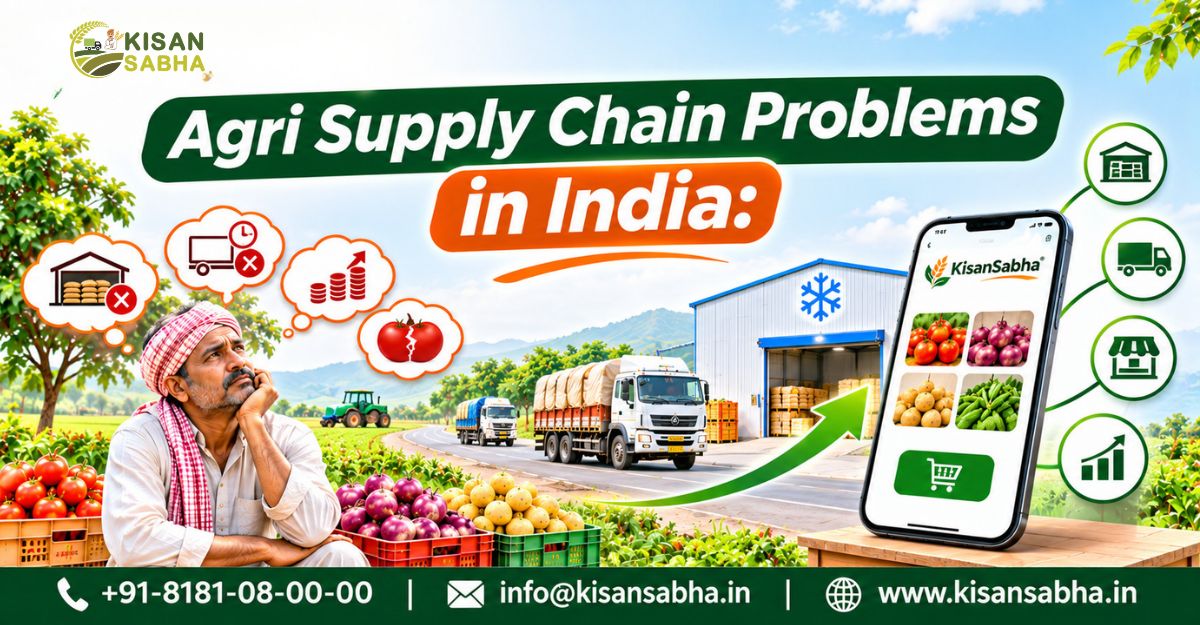
through several stages before reaching consumers. These include collection, grading, packaging, storage, transportation and distribution.
Unfortunately, managing this journey is not always easy.
Farmers often struggle to find suitable warehouses, affordable transportation and reliable buyers. Agricultural traders face difficulties managing supplies, while transporters deal with vehicle availability and empty return journeys. Limited market information and payment delays create additional challenges.
These are some of the major agri supply chain problems in India that affect farmers, traders, transporters and other agricultural businesses.
However, these challenges also create opportunities for innovation.
Agritech startups are developing digital marketplaces, warehouse discovery platforms, agricultural logistics services and price information tools to improve how agricultural products move from farms to markets.
In this article, we explore 11 major agricultural supply chain challenges in India, their impact on businesses and the startup solutions that can help build a more connected agricultural ecosystem.
What Is an Agricultural Supply Chain?
An agricultural supply chain is the complete process of moving agricultural products from farms to their final buyers.
It involves several activities, including harvesting, collection, sorting, grading, packaging, storage, transportation and distribution.
A typical agricultural supply chain follows this process:
Farm → Collection Centre → Grading and Packaging → Warehouse → Transportation → Mandi or Wholesaler → Retailer or Processor → Consumer
Every stage plays an important role.
For example, a farmer may harvest good-quality tomatoes, but poor packaging or delayed transportation can affect their freshness before they reach the market.
Similarly, a trader may find a suitable buyer but struggle to arrange an affordable truck for delivery.
An efficient supply chain connects these activities and helps agricultural products reach their destinations with better coordination.
Why Does India’s Agricultural Supply Chain Face Challenges?
India’s agricultural supply chain involves millions of farmers, traders, transporters, warehouse operators and buyers. Many of these participants operate independently, which can make coordination difficult.
Some common challenges include:
- Small and scattered agricultural production.
- Limited access to warehouses and cold storage.
- High transportation and handling costs.
- Poor grading and packaging practices.
- Limited access to market price information.
- Difficulties connecting farmers with bulk buyers.
- Delayed payments and working capital shortages.
- Limited adoption of digital technology in some rural markets.
These problems can affect the entire supply chain. A delay in one stage may increase costs or reduce product quality at another.
Let’s understand these challenges and the solutions startups can develop.
11 Major Agri Supply Chain Problems in India and Their Solutions
1. Fragmented Farms and Limited Market Access
The problem
Many Indian farmers operate on relatively small landholdings and produce limited quantities of agricultural commodities.
Large retailers, wholesalers and food processing companies often require consistent quantities and quality. Individual farmers may find it difficult to fulfil these requirements independently.
As a result, connecting small producers with large buyers can become complicated.
Impact on the agricultural supply chain
- Limited bargaining power for small farmers.
- Higher collection and transportation costs.
- Difficulties fulfilling bulk orders.
- Dependence on local buyers.
Startup solution
Agritech startups can develop farmer aggregation platforms that connect multiple producers with bulk purchasers.
Useful solutions include:
- Digital farmer and supplier directories.
- FPO-based collective marketing.
- Crop-wise supplier discovery.
- Farmer-to-buyer marketplaces.
- Digital agricultural procurement systems.
For example, a food processing company looking for regular tomato supplies could connect with several farmers from the same agricultural region.
Business opportunity: Digital agricultural marketplaces and farmer aggregation services.
2. Inadequate Storage and Cold Chain Facilities
The problem
Storage plays an important role in maintaining agricultural product quality. However, suitable warehouses and cold storage facilities may not be easily accessible in every agricultural region.
Fruits, vegetables and other perishable products need appropriate storage conditions. Without them, farmers and traders may experience product damage and financial losses.
Farmers may also feel pressure to sell immediately after harvesting when storage options are limited.
Impact on the agricultural supply chain
- Reduced product quality.
- Higher post-harvest losses.
- Limited flexibility in selling decisions.
- Difficulty managing agricultural inventory.
Startup solution
Digital warehouse marketplaces can connect warehouse owners with farmers, traders and businesses looking for storage facilities.
Potential solutions include:
- Online warehouse directories.
- Digital warehouse enquiry systems.
- Shared cold storage facilities.
- Pay-per-use storage models.
- Location-based storage discovery.
For example, a potato trader looking for storage in a particular district could submit an enquiry through an online platform instead of contacting multiple warehouse operators individually.
Business opportunity: Agricultural warehouse marketplaces, cold storage services and storage management platforms.
KisanSabha connection: Explore KisanSabha Warehouse Inquiry for warehouse-related enquiries and storage opportunities.
3. High Transportation Costs and Empty Return Trips
The problem
Transportation connects farmers with mandis, warehouses, wholesalers and food processing companies.
However, finding the right truck at the right time and price can be difficult.
Small farmers may not have enough produce to hire a full truck. At the same time, transporters may return without another load after completing a delivery.
These situations can increase logistics costs and reduce vehicle utilisation.
Impact on the agricultural supply chain
- Higher transportation expenses.
- Delayed deliveries.
- Difficulty arranging vehicles for smaller shipments.
- Empty return journeys for transporters.
Startup solution
Digital agricultural logistics platforms can connect available trucks with businesses that need transportation.
Some useful solutions include:
- Online truck booking.
- Full-load and part-load transportation.
- Digital load-matching platforms.
- Return-load opportunities.
- Shipment coordination and tracking.
For example, a transporter delivering agricultural produce to another city could find a suitable return load instead of travelling back with an empty vehicle.
Business opportunity: Digital freight marketplaces, agricultural logistics platforms and fleet management solutions.
KisanSabha connection: Visit KisanSabha Agri Logistics to explore agricultural transportation-related services.
4. Multiple Intermediaries and Limited Price Transparency
The problem
Agricultural products often pass through several participants before reaching the final buyer.
These may include commission agents, local traders, wholesalers and distributors.
Intermediaries provide important services such as collection, financing, transportation and market access. However, when transaction costs and prices are not transparent, farmers may find it difficult to understand the actual value of their produce.
Impact on the agricultural supply chain
- Limited price transparency.
- Additional procurement costs.
- Difficulties identifying suitable buyers.
- Complex communication between market participants.
Startup solution
Digital agricultural marketplaces can improve communication and make buying and selling information more accessible.
Possible solutions include:
- Direct farmer-to-buyer connections.
- Digital buy and sell lead platforms.
- Verified trader profiles.
- Online product listings.
- Transparent transaction information.
The goal is not necessarily to eliminate every intermediary. It is to improve efficiency and transparency while retaining useful services such as collection, financing and distribution.
Business opportunity: Digital agricultural marketplaces and B2B procurement platforms.
5. Limited Access to Agricultural Market Price Information
The problem
Agricultural prices vary between mandis and change according to supply, demand, season and location.
Farmers who do not have access to reliable market information may find it difficult to compare selling opportunities.
For example, a distant mandi may offer a higher price, but additional transportation and handling expenses could reduce the final benefit.
Impact on the agricultural supply chain
- Limited market awareness.
- Difficulties comparing selling opportunities.
- Uncertain procurement decisions.
- Reduced price transparency.
Startup solution
Agricultural price intelligence platforms can help farmers and traders access useful market information.
Important features may include:
- Daily mandi price updates.
- Crop-wise market comparisons.
- Location-based price information.
- Market notifications.
- Historical price trends.
- Transportation cost comparisons.
Business opportunity: Mandi price applications, agricultural market intelligence platforms and data-driven advisory services.
KisanSabha connection: Explore KisanSabha Mandi Rate for agricultural market information. You can also explore the Freight Calculator when comparing transportation expenses between markets.
6. Poor Grading, Sorting and Packaging Practices
The problem
Agricultural produce is not always sorted according to size, quality and buyer requirements.
When good-quality and lower-quality products are mixed together, farmers may not receive the appropriate value for premium produce.
Poor packaging can also increase damage during transportation and handling.
Impact on the agricultural supply chain
- Inconsistent product quality.
- Reduced value for premium produce.
- Higher product damage.
- Difficulties meeting buyer requirements.
Startup solution
Entrepreneurs can establish grading and packaging centres or develop digital quality management solutions.
Potential services include:
- Crop-wise grading.
- Sorting and quality assessment.
- Standardised packaging.
- Reusable agricultural crates.
- Digital quality records.
- Collection-centre management.
Business opportunity: Agricultural grading centres, packaging businesses and post-harvest management services.
7. Payment Delays and Limited Working Capital
The problem
Payment delays can create financial difficulties for farmers, traders and transporters.
Farmers often need funds after harvesting to manage household expenses and prepare for the next agricultural season.
When payments are delayed, they may struggle to meet their financial requirements.
Transporters and small dealers can also experience cash-flow problems when customers do not pay on time.
Impact on the agricultural supply chain
- Working capital shortages.
- Payment disputes.
- Difficulty managing daily expenses.
- Delays in business operations.
Startup solution
Digital transaction management systems can help improve payment records and financial transparency.
Possible solutions include:
- Digital invoices.
- Payment tracking systems.
- Transaction histories.
- Automated payment reminders.
- Connections with regulated financial institutions.
- Eligible warehouse receipt financing arrangements.
Financing-related services must comply with applicable financial and warehouse regulations.
Business opportunity: Agricultural transaction management software and authorised financial service partnerships.
8. Poor Demand Forecasting and Supply Planning
The problem
Agricultural production and market demand do not always remain balanced.
Farmers may select crops based on previous seasons or local information without having a clear understanding of future market demand.
This can contribute to excess supply in certain markets and shortages in others.
Traders and food processors may also struggle to plan their purchases when reliable supply information is limited.
Impact on the agricultural supply chain
- Uncertain market conditions.
- Excess inventory in some markets.
- Procurement difficulties.
- Greater price fluctuations.
Startup solution
Data-driven agricultural platforms can help businesses understand market patterns and improve planning.
Useful features include:
- Historical market price analysis.
- Crop-wise demand information.
- Buyer requirement databases.
- Supply planning tools.
- Digital buying and selling leads.
- Market trend dashboards.
These tools can support better decisions, although forecasts should not be treated as guaranteed future prices.
Business opportunity: Agritech analytics, agricultural demand forecasting and market intelligence platforms.
9. Limited Agricultural Product Traceability
The problem
Buyers may not always have reliable information about where agricultural products originated, how they were handled or whether appropriate quality checks were completed.
This can create challenges for food processors, exporters and businesses dealing with premium agricultural products.
Impact on the agricultural supply chain
- Difficulty verifying product origin.
- Limited quality documentation.
- Challenges resolving product disputes.
- Reduced transparency between suppliers and buyers.
Startup solution
Digital traceability platforms can maintain product information throughout the supply chain.
Possible solutions include:
- QR-based product identification.
- Digital supplier records.
- Batch-level tracking.
- Quality testing documentation.
- Verified business profiles.
- Digital transaction histories.
For example, a QR code on packaged agricultural produce could provide access to available information about its source and relevant quality records.
Business opportunity: Agricultural traceability software and quality verification services.
10. Digital Adoption and Trust Challenges
The problem
Digital platforms can make agricultural business operations easier, but adoption is not always straightforward.
Some farmers and small traders prefer local-language communication and personal assistance when using new technology.
Concerns about fraud, incorrect information and unreliable transactions can also reduce trust.
Impact on the agricultural supply chain
- Low adoption of digital services.
- Difficulty onboarding rural users.
- Language and communication barriers.
- Reduced confidence in online transactions.
Startup solution
Agritech businesses should make their services simple, accessible and reliable.
Useful approaches include:
- Easy-to-use mobile applications.
- Regional language support.
- WhatsApp and telephone assistance.
- Verified user profiles.
- Transparent pricing.
- Field-level onboarding.
- Responsive customer support.
Business opportunity: Local-language agritech applications and rural digital service platforms.
11. Different Regulatory and Documentation Requirements
The problem
Agricultural trading, food processing, storage and transportation may involve different legal and documentation requirements.
These requirements can depend on the type of business, commodity and state.
Startups expanding into new regions need to understand applicable rules before offering services.
Impact on the agricultural supply chain
- Additional documentation requirements.
- Delays in business expansion.
- Compliance-related expenses.
- Difficulties managing operations across regions.
Startup solution
Digital platforms can help businesses organise documentation and access relevant compliance information.
Potential solutions include:
- Digital document management.
- Region-specific compliance information.
- E-way bill guidance.
- Transport documentation support.
- Business onboarding assistance.
Business opportunity: Agricultural compliance technology and digital documentation services.
Businesses should verify current requirements through official authorities and qualified professionals.
How Technology Is Improving Agricultural Supply Chain Management
Technology is helping agricultural businesses communicate, share information and coordinate operations more efficiently.
Different digital solutions address different supply chain requirements.
| Technology | Application | Potential Benefit |
| Digital marketplaces | Farmer and buyer connections | Better market access |
| GPS tracking | Vehicle and shipment tracking | Improved visibility |
| Data analytics | Market price and demand analysis | Better planning |
| QR codes | Product traceability | Easier access to product information |
| Mobile applications | Agricultural service discovery | Better communication |
| Digital payments | Transaction management | Transparent records |
| Warehouse platforms | Storage discovery | Easier storage enquiries |
| Load matching | Truck and shipment connections | Better vehicle utilisation |
However, technology alone cannot solve every agricultural supply chain problem.
Successful solutions also require reliable infrastructure, accurate information, local partnerships and effective customer support.
Agritech Startup Opportunities in India’s Agricultural Supply Chain
The challenges discussed above create several opportunities for entrepreneurs who want to build businesses in the agriculture sector.
Here are seven promising areas to explore.
| Startup Opportunity | Problem It Addresses | Potential Business Model |
| Agricultural logistics platform | Transportation difficulties | Booking fees and commissions |
| Warehouse discovery platform | Limited storage access | Listing and enquiry fees |
| Digital mandi software | Manual business records | Monthly subscriptions |
| Agricultural price intelligence | Limited market information | Premium subscriptions |
| Farmer aggregation platform | Fragmented production | Service and transaction fees |
| Quality management services | Poor grading and sorting | Service charges |
| Agricultural B2B marketplace | Buyer-seller connectivity | Commission and subscriptions |
How Should Entrepreneurs Start?
Rather than investing in a large platform immediately, entrepreneurs should begin with a clearly defined problem.
- Identify one agricultural supply chain challenge.
- Speak with farmers, traders and transporters.
- Understand who will pay for the solution.
- Select one crop, market or transportation route.
- Test the service with real customers.
- Measure repeat usage and operating costs.
- Expand after validating the business model.
A solution that works in one agricultural region can provide useful insights before expansion into other markets.
How KisanSabha Supports Agricultural Supply Chain Connectivity
A connected agricultural ecosystem requires better coordination between farmers, buyers, mandi dealers, transporters and warehouse operators.
KisanSabha is an agriculture and transport portal that provides services related to agricultural market connections and logistics.
Its platform offers several services that agricultural businesses can explore.
1. Warehouse Inquiry
Explore warehouse-related requirements and storage enquiries through KisanSabha Warehouse Inquiry.
2. Agri Logistics
Visit KisanSabha Agri Logistics to explore agricultural transportation services.
3. Agricultural Directory
Use the KisanSabha Directory to discover agricultural participants and business connections.
4. Mandi Rate Information
Visit KisanSabha Mandi Rate for agricultural market information.
5. Buy Leads and Sell Leads
Explore KisanSabha Buy Leads and Sell Leads for potential agricultural buying and selling requirements.
6. Agritech Startup Opportunities
Discover related information through the KisanSabha Agritech Startups and Agri Supply Chain Startups pages.
By bringing relevant agricultural services together, digital platforms can help businesses explore market connections and supply chain opportunities.
Frequently Asked Questions About Agri Supply Chain Problems in India
The major challenges include fragmented agricultural production, inadequate storage, high transportation costs, limited market information, poor grading, payment delays, weak demand forecasting and limited product traceability.
Agricultural supply chain management coordinates the movement of products from farms to consumers. It helps businesses manage collection, storage, transportation, product quality and distribution.
Startups can develop digital marketplaces, warehouse discovery platforms, transportation solutions, mandi price tools, farmer aggregation networks and agricultural management software.
Digital agriculture platforms can help farmers discover buyers, share selling requirements, access market information and communicate with agricultural businesses.
Logistics supports the movement of agricultural products from farms to collection centres, warehouses, mandis, processors and retailers. Better transportation coordination can help businesses manage delivery schedules and costs.
Storage problems can be addressed through suitable warehouses, cold storage facilities, proper handling and packaging, and digital platforms that connect storage providers with potential customers.
Potential opportunities include agricultural marketplaces, cold chain logistics, warehouse management, price intelligence, farmer aggregation, digital mandi software and agricultural traceability.
Farmers can check available market information from reliable sources, compare prices across different mandis and consider transportation and handling costs before selecting a selling destination.
Farmer Producer Organisations can help farmers collectively manage activities such as aggregation, procurement, marketing and buyer connections, depending on their operations.
KisanSabha provides services related to agricultural directories, warehouse enquiries, mandi information, agricultural logistics and buying and selling leads.
Conclusion: Building a Stronger Agricultural Supply Chain in India
India’s agricultural supply chain faces challenges at almost every stage, from farm-level collection to final delivery.
Limited storage, high transportation costs, fragmented production, poor market information and payment difficulties affect farmers and businesses across the agricultural ecosystem.
However, these challenges also create opportunities for innovation.
Agritech startups and digital platforms can help improve market connectivity, simplify logistics, provide better access to agricultural information and make storage services easier to discover.
The key is to develop solutions that address actual market requirements rather than introducing technology without understanding users’ needs.
For entrepreneurs, this means identifying one specific problem, understanding the people affected and building a practical business model.
For farmers and agricultural businesses, better digital connections can make it easier to discover services, explore market opportunities and communicate with other participants.
Looking to explore agricultural services and business connections? Visit KisanSabha and discover opportunities across India’s agricultural supply chain.