Introduction
India has a large agricultural market with growing demand for fresh fruits, vegetables, grains, pulses and other agricultural products. Before reaching retailers, wholesalers or consumers, these products often pass through several stages of the supply chain.
Farmers, traders, mandi dealers, wholesalers and transporters all play an important role in this process.
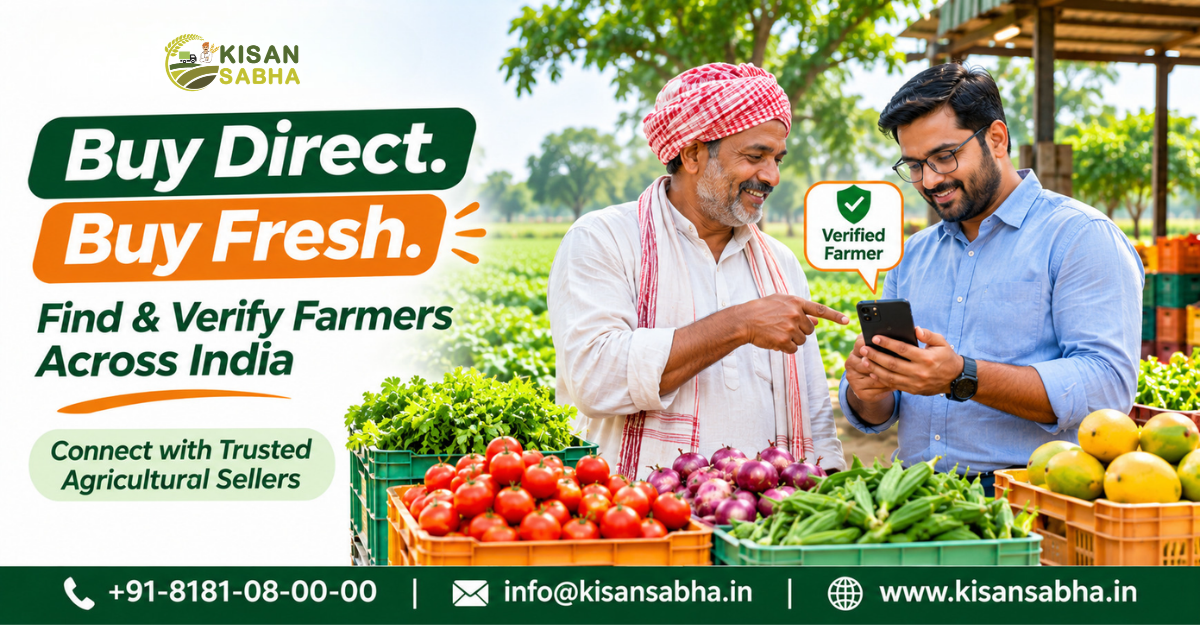
But did you know that you can buy agricultural products directly from farmers without depending on multiple intermediaries?
Today, digital agricultural platforms make it easier for buyers to connect with farmers and agricultural sellers across different locations. These platforms help buyers explore products, compare available offers and plan their purchases more conveniently.
However, finding the right farmer and verifying a seller before making a purchase are equally important.
In this guide, you will learn where to find farmers in India, how to buy fruits and vegetables directly from them, how to verify sellers, and how online agricultural marketplaces like KisanSabha can help connect buyers with agricultural businesses.
Why Should You Buy Agricultural Products Directly from Farmers?
When agricultural products move directly from farms to buyers, the purchasing process can become more transparent and organised.
In traditional supply chains, products often pass through multiple traders and agents. Each stage may add costs and involve additional handling.
Buying directly from farmers offers several potential benefits.
1. Better Pricing Opportunities
Buying directly gives you an opportunity to compare offers from different farmers and sellers.
You may find competitive prices and better purchasing options. However, actual savings depend on the crop, season, order quantity and transportation costs.
2. Access to Fresh Agricultural Products
When you connect directly with farmers, you can ask about harvesting schedules, product availability and dispatch dates.
This information is especially useful when purchasing perishable products such as fruits and vegetables.
3. Better Information About Product Sources
Direct communication allows buyers to understand where their agricultural products come from.
You can ask questions such as:
- Where was the crop grown?
- What is the variety of the product?
- How much quantity is available?
- When will the crop be harvested?
- How will the products be packed?
4. Opportunities for Regular Supply
Building a good business relationship with farmers can make future purchases easier.
This is particularly useful for wholesalers, retailers, hotels, restaurants and food processing companies that require regular agricultural supplies.
5. More Business Opportunities for Farmers
Direct selling gives farmers an opportunity to connect with new buyers beyond their local markets.
It can help them explore business opportunities with traders, retailers and agricultural businesses in other cities and states.
5 Ways to Buy Agricultural Products Directly from Farmers in India
If you want to buy fruits, vegetables, grains or other agricultural products directly from farmers, there are several options available.
Each method has its own advantages and limitations.
| Buying method | Best suited for | Main advantage |
| Local mandis | Local buyers and traders | Multiple sellers in one place |
| Direct farm visits | Nearby buyers | Opportunity to inspect crops |
| FPOs and farmer groups | Wholesale buyers | Potential for bulk supply |
| WhatsApp and social media | Small buyers and traders | Quick seller connections |
| Online agricultural marketplaces | Buyers across cities and states | Digital seller discovery |
1. Buy from Local Agricultural Mandis
Mandis are important marketplaces for farmers, traders and agricultural buyers.
You can visit a local mandi to explore fruits, vegetables, grains, pulses and other agricultural products.
It also allows you to compare product quality and prices from different sellers.
However, not every seller in a mandi is a farmer. Many sellers are traders or commission agents.
Before purchasing, ask whether the products come directly from farmers or through another supplier.
2. Visit Farms and Connect with Farmers Directly
If you want to purchase agricultural products from nearby locations, visiting farms can be a useful option.
It gives you an opportunity to:
- Inspect the crop.
- Check product quality.
- Discuss available quantities.
- Understand harvesting schedules.
- Build direct relationships with farmers.
This method works well for local purchases and regular business relationships.
However, visiting farms in different states can be time-consuming and expensive.
3. Connect with Farmer Producer Organizations (FPOs)
A Farmer Producer Organization (FPO) is an organisation that brings farmers together to participate in collective agricultural and business activities.
FPOs can help buyers connect with groups of farmers and explore larger quantities of agricultural produce.
Key benefits include:
- Opportunities for bulk agricultural purchases.
- Collective supply from multiple farmers.
- Grading and packaging facilities, where available.
- Organised communication with farmer groups.
- Opportunities for regular procurement.
FPOs can be particularly useful for wholesalers, retailers and agricultural businesses that require larger quantities.
4. Find Farmers Through WhatsApp and Social Media Groups
Many farmers and agricultural traders share product information through WhatsApp groups and social media platforms.
These groups can help buyers discover sellers of fruits, vegetables, grains and other agricultural products.
However, buyers should be careful when dealing with unknown sellers.
Do not make advance payments based only on product photographs or online messages. Verify the seller’s identity, product availability and business details first.
5. Use an Online Agricultural Marketplace
An online agricultural marketplace is a convenient way to connect farmers, buyers and agricultural businesses through digital platforms.
Instead of searching for individual sellers, buyers can explore agricultural product listings and seller information online.
These platforms can help you:
- Explore agricultural product listings.
- Connect with sellers from different locations.
- Understand product availability and quantities.
- Compare prices and business offers.
- Discuss purchasing requirements.
- Plan transportation and delivery.
KisanSabha’s Agricultural Marketplace is designed to help connect farmers, buyers and agricultural traders.
How to Find Verified Farmers and Trusted Agricultural Sellers
One of the biggest concerns when buying directly from farmers is seller verification.
A good product photograph, attractive price or online advertisement does not automatically make a seller trustworthy.
Before placing a large order, check the following details.
1. Verify the Farmer’s Identity and Location
Check the seller’s name, mobile number, village, district and available profile information.
If possible, request a video call or a recent video showing the farm and available produce.
2. Check Complete Product Information
Before purchasing, confirm:
- Crop name and variety.
- Total available quantity.
- Product quality and condition.
- Harvesting or dispatch date.
- Packaging method.
- Current product availability.
3. Confirm Pricing and Payment Terms
Discuss the following details before confirming your order:
- Price per kilogram, quintal or tonne.
- Total order value.
- Advance payment, if applicable.
- Remaining payment schedule.
- Responsibility for loading and unloading.
- Transportation charges.
- Delivery and quality conditions.
Keep all agreed terms in writing.
4. Check Previous Buyer Experiences
If the seller has previous business experience, try to collect feedback from earlier buyers.
Where available, check seller ratings, reviews and transaction records.
5. Request Samples Before Large Orders
If you are purchasing from a new seller, consider placing a small trial order first.
This helps you understand the actual product quality, packaging standards and delivery experience before committing to a larger purchase.
Warning Signs of Unreliable Sellers
Be careful if a seller:
- Offers prices far below the market rate without a clear reason.
- Pressures you to make a large advance payment immediately.
- Refuses to share farm or product videos.
- Provides unclear information about available quantities.
- Frequently changes payment conditions.
- Shares only a WhatsApp number without providing sufficient business information.
Tip: Compare available market information through KisanSabha’s Mandi Rate page before finalising your purchase.
How to Connect with Farmers and Agricultural Sellers Through KisanSabha
Digital agricultural marketplaces are becoming useful tools for connecting farmers, buyers and agricultural businesses.
KisanSabha is a digital agriculture and transportation portal that aims to connect farmers, mandi dealers, transporters and agricultural service providers.
Its Agricultural Marketplace is designed to help buyers and sellers discover agricultural trading opportunities.
Key Features of the KisanSabha Agricultural Marketplace
The following features should be included according to their availability on the live platform:
- Agricultural product listings and descriptions.
- Connections between buyers and sellers.
- Communication about prices and business requirements.
- Agricultural buying and selling leads.
- Transportation-related services.
- Website access in multiple Indian languages.
Note: Confirm the availability of bidding, secure payments, ratings and other advanced features on the current platform before publishing these claims.
Step-by-Step: How to Get Started on KisanSabha
Step 1: Register on KisanSabha
Visit the official KisanSabha website and create your account.
Step 2: Explore Agricultural Products
Visit the Agricultural Marketplace and explore available agricultural products and seller information according to your requirements.
Step 3: Verify Seller Information
Check the seller’s name, location, product quantity and available contact details.
For large orders, request product photographs, videos or samples before confirming the purchase.
Step 4: Discuss Prices and Quantities
Contact the farmer or seller and discuss product prices, quality, packaging and delivery conditions.
Step 5: Arrange Transportation
If you are purchasing agricultural products from another city or state, plan transportation in advance.
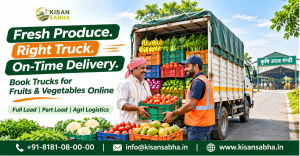
You can explore KisanSabha’s Agri Logistics service to connect with transporters and check available load-posting options.
The platform information also mentions Full Load and Part Load options. Confirm current quantity limits and availability before booking.
Step 6: Confirm Payment and Delivery
Agree on the payment method, delivery date and product quality conditions.
After receiving the products, inspect the quantity and quality. Keep payment proof and purchase-related documents for future reference.
How to Find Farmers and Mandi Dealers on KisanSabha
KisanSabha’s Directory allows users to explore available categories and find information related to farmers and mandi dealers.
Depending on the available listings, categories may include horticulture, organic farming, jaggery, fruits, vegetables, grains, spices and pulses.
What Should You Check Before Buying Agricultural Products in Bulk?
If you operate a hotel, restaurant, retail store, mandi or food processing business, proper purchasing planning is essential.
1. Decide Your Purchase Quantity
First, calculate how much produce you need in kilograms, quintals or tonnes.
Also decide whether you need a one-time purchase or a regular supply.
2. Set Product Quality Standards
Inform the farmer about your quality requirements before placing the order.
These may include:
- Product size.
- Colour and variety.
- Freshness.
- Grading standards.
- Required quantity.
Clear requirements help reduce quality-related disagreements during delivery.
3. Confirm Packaging Arrangements
Use suitable crates, boxes or bags for agricultural products.
Confirm who will arrange the packaging and whether its cost is included in the purchase price.
4. Plan Transportation in Advance
After purchasing agricultural products, you need to transport them from the farm to a mandi, warehouse or retail location.
Discuss truck availability, distance, delivery schedule and freight charges in advance.
5. Arrange Warehouse or Cold Storage Facilities
If you cannot sell the purchased products immediately, plan suitable storage facilities.
You can submit an enquiry through KisanSabha’s Warehouse Inquiry page.
6. Keep Required Documents Ready
Maintain purchase invoices, payment records, delivery details and other applicable documents.
Check the relevant rules according to the nature of the goods and transaction.
6 Important Tips for Safer Direct Purchasing from Farmers
Choosing the right seller is important, but safe payment and delivery arrangements are equally necessary.
Follow these precautions:
- Start with a small order: Avoid placing a large order with a new seller without testing the product.
- Avoid large advance payments: Do not transfer substantial amounts before verifying the seller and agreed terms.
- Keep written records: Maintain records of prices, quantities and delivery dates.
- Take loading photographs: Keep a record of product condition and packaging before dispatch.
- Compare mandi rates: Do not make purchasing decisions based only on low prices.
- Build long-term relationships: Develop regular business connections with reliable farmers.
Common Mistakes to Avoid When Buying Directly from Farmers
Small mistakes can lead to additional expenses and unnecessary business losses.
Avoid these common problems:
- Trusting online listings without verification.
- Paying the full advance amount to a new seller.
- Not confirming product grading and quality.
- Ignoring transportation and loading costs.
- Failing to agree on delivery dates.
- Skipping product samples before large orders.
- Not maintaining payment and delivery records.
Proper planning and seller verification can help reduce these risks.
Frequently Asked Questions About Buying Directly from Farmers
You can connect with farmers through local mandis, farm visits, FPOs, farmer groups and online agricultural marketplaces. Digital platforms such as KisanSabha also help users explore agricultural products and seller information.
Check the farmer’s name, mobile number, village and available business information. Request recent crop photographs or videos and consider placing a small trial order before making a large purchase.
Direct purchasing may offer better prices in some situations, but savings are not guaranteed. Compare product prices along with transportation, storage and handling expenses before making a decision.
Yes. Small traders can connect with local farmers or explore online agricultural marketplaces according to their requirements. Always check minimum order quantities and transportation availability.
You can contact local transporters or explore KisanSabha’s Agri Logistics service to find agricultural transportation options.
Yes. You can explore the available categories through KisanSabha’s Directory and Agricultural Marketplace to find information related to farmers, mandi dealers and agricultural products.
Yes. Buyers can contact farmers, FPOs and agricultural sellers to explore bulk purchasing opportunities. Confirm product quantity, quality, packaging and delivery conditions before placing an order.
Visit the official KisanSabha website and create an account through the Registration page. You can then explore the available Agricultural Marketplace and Directory options.
Conclusion: Connect Directly with Farmers and Grow Your Agricultural Business with KisanSabha
Buying agricultural products directly from farmers can be a useful option for buyers, wholesalers and agricultural businesses.
It creates opportunities to understand product sources, compare prices and develop direct business relationships with farmers.
However, successful purchasing requires more than finding a good price. Seller verification, product quality, payment conditions, transportation and storage planning are equally important.
Digital agricultural marketplaces are making these connections more convenient.
KisanSabha aims to bring farmers, buyers, mandi dealers, transporters and agricultural service providers together through one digital platform.
Whether you are a farmer, wholesaler or agricultural product buyer, KisanSabha can help you explore new connections and business opportunities across the agricultural ecosystem.
Register on KisanSabha today and connect with farmers and agricultural businesses across India.
KisanSabha – Connecting Farmers, Buyers and Agricultural Businesses.