
Agri Supply Chain Startups: What They Do and Why They Matter
A truckload of tomatoes leaves a farm in good condition and arrives at a distant market partially spoiled, because no one along the way tracked temperature, timing, or the fastest route. This kind of loss is common in India’s agricultural supply chain, and it’s exactly the gap that agri supply chain startups are trying to close. These are companies building technology and logistics solutions to connect farmers, transporters, traders, and buyers more directly and efficiently. This article explains what agri supply chain startups actually do, the specific problems they solve, the challenges they face, and how to evaluate one if you’re a farmer, trader, or transporter deciding whether to use one.
What Are Agri Supply Chain Startups?
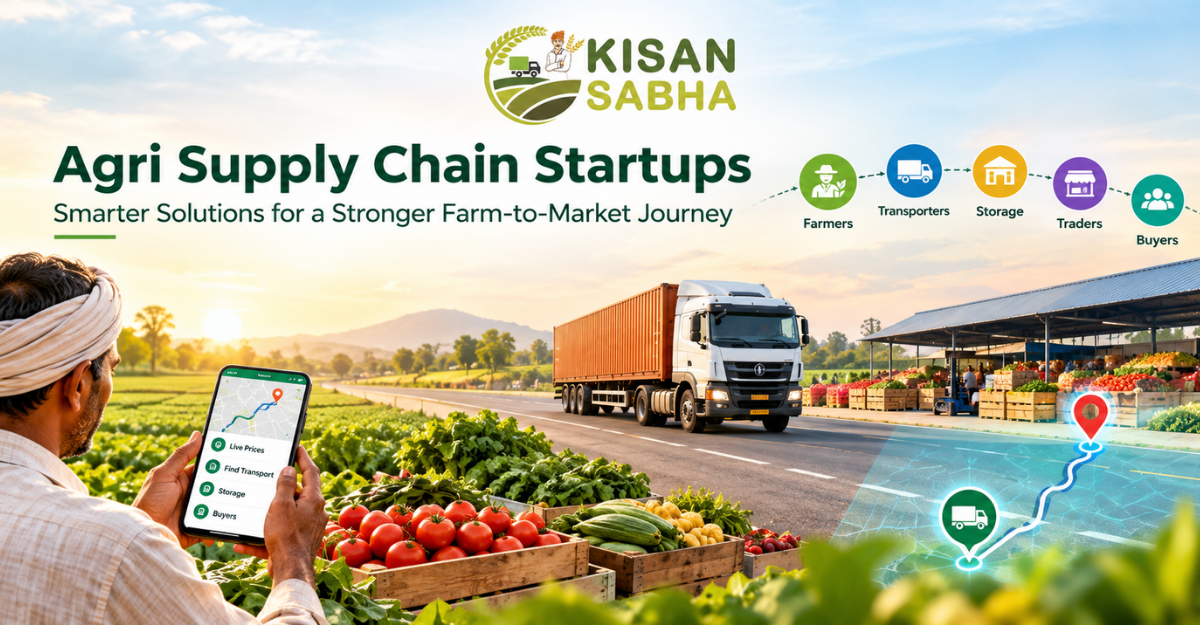
Agri supply chain startups are technology-driven companies that address inefficiencies in how agricultural produce moves from farms to markets, processors, or consumers. Instead of relying purely on traditional, informal networks of local traders and middlemen, these startups use digital platforms – apps, websites, or SMS-based tools – to solve one or more parts of the chain: price discovery, transport matching, storage, quality grading, or payments.
Quick definition: An agri supply chain startup is a company that uses technology to improve one or more stages of moving farm produce from the point of harvest to its final buyer –commonly logistics, market access, storage, or price transparency.
Common Categories of Agri Supply Chain Startups
| Category | What It Solves | Example Function |
| Marketplace platforms | Connecting farmers directly with buyers | Listing crops for sale, buyer discovery |
| Logistics/transport aggregators | Truck and load matching | Finding a truck for a harvest, freight estimation |
| Price discovery tools | Lack of transparent pricing | Live mandi rate tracking |
| Cold chain and storage networks | Post-harvest spoilage | Locating nearby cold storage or godowns |
| Agri-fintech | Access to credit and insurance | Loans, crop insurance, faster payments |
Most startups in this space focus on one or two of these categories rather than trying to solve everything at once, though some platforms combine several functions.
Why Do Agri Supply Chain Startups Matter?
India’s agricultural supply chain has historically relied on multiple layers of intermediaries between the farmer and the final buyer, each adding a margin and, in many cases, adding time that fresh produce can’t always afford. This structure has contributed to well-documented problems:
- Post-harvest losses, particularly for perishable produce, due to poor storage and slow transport
- Price uncertainty for farmers, who often don’t know the prevailing market rate before selling
- Fragmented transport availability, making it hard to find a truck quickly during peak harvest season
- Limited direct market access, especially for small and marginal farmers far from major mandis
Agri supply chain startups matter because they attempt to shorten or digitize parts of this chain – giving farmers more visibility into prices, easier access to transport, and in some cases, a more direct route to buyers.
How Do Agri Supply Chain Startups Work?
- Onboarding participants: Farmers, traders, transporters, or buyers register on the platform, usually through a mobile app or website.
- Listing or matching: Depending on the platform’s focus, users either list produce for sale, post a truck’s availability, or search for a load/buyer.
- Price or rate visibility: Many platforms display current mandi rates or reference prices so both sides negotiate with more information.
- Connecting the parties: The platform facilitates a direct connection – a farmer with a buyer, or a shipper with a transporter – often without requiring an in-person visit first.
- Logistics execution: Once a deal or booking is made, the physical movement of goods happens, sometimes tracked through the platform (e.g., GPS-enabled trucking).
- Payment and settlement: Some startups also handle or facilitate payment, reducing delays that are common in informal transactions.
Key Benefits of Agri Supply Chain Startups
- Reduced dependence on multiple intermediaries: Direct or semi-direct connections between farmers and buyers/transporters can shorten the chain.
- Better price transparency: Access to live rate information helps farmers negotiate from a stronger position.
- Faster access to transport: Truck/load matching reduces the time farmers or traders spend searching for available vehicles.
- Reduced spoilage risk: Faster matching and better storage discovery can reduce the time produce spends in transit or unsuitable storage.
- Wider market reach: Farmers in less-connected areas can potentially reach buyers or mandis they wouldn’t easily access otherwise.
Common Challenges Agri Supply Chain Startups Face
- Trust and verification: Both farmers and buyers need confidence that the other party is genuine -this is why verified profiles and ratings matter on these platforms.
- Low digital literacy in some regions: Not every farmer is comfortable using an app, which limits adoption in certain areas.
- Last-mile connectivity: Even with a good platform, poor rural roads and limited cold storage infrastructure remain real bottlenecks that technology alone can’t fully solve.
- Fragmented regulation: Agricultural marketing rules vary by state, which can complicate building a single, seamless national platform.
- Profitability pressure: Many agri supply chain startups operate on thin margins, since farmers and small traders are price-sensitive, which makes sustainable unit economics a genuine challenge for the sector.
It’s worth being clear-eyed about these limitations – agri supply chain startups are a meaningful improvement over purely informal networks, but they don’t eliminate every structural problem in Indian agriculture overnight.
How Digital Platforms Like KisanSabha Fit In
KisanSabha is one example of an agri supply chain platform built around several of the categories above. It combines a load and truck board for matching farmers and transporters, a live Mandi Rate section for price transparency, a Freight Calculator for estimating transport cost, and a directory of verified farmers, mandi dealers, transporters, and agricultural service providers including cold storage and godown listings.
For someone evaluating agri supply chain startups, a practical way to judge them is by checking whether the platform actually addresses a concrete pain point you have – price visibility, transport availability, or storage access – rather than judging by marketing claims alone.
Frequently Asked Questions
An agri supply chain startup is a technology company that improves one or more stages of moving farm produce from harvest to final buyer -typically logistics, market access, price transparency, or storage.
Revenue models vary – common approaches include subscription or listing fees, commission on transactions, freight/logistics fees, or premium features for verified profiles and priority listings.
They primarily address price uncertainty, fragmented transport access, post-harvest losses due to poor storage or delays, and limited direct market access for farmers.
No. Many platforms are built specifically to help small and marginal farmers access information and markets that were previously harder to reach without a large trader network.
Agritech is a broader term covering technology in farming generally (including things like precision agriculture and crop advisory), while agri supply chain startups specifically focus on the movement of produce from farm to market.
Not typically. Most work alongside the existing mandi system, using it as a reference point for pricing and, in many cases, as the physical location where produce is still bought and sold.
Look for verified user profiles, transparent pricing information, actual coverage in your region, and clear terms around payments and any fees charged.
Final Thoughts
Agri supply chain startups exist to solve real, persistent problems in Indian agriculture – price uncertainty, fragmented transport, and inefficient storage – by making information and connections more direct and accessible. They aren’t a complete fix for every structural issue in the sector, but for a farmer trying to find a fair price or a trader trying to book a truck quickly, they offer a genuinely useful alternative to relying entirely on informal networks. If you want to see how these pieces – mandi rates, transport matching, and verified directories -work together in practice, explore KisanSabha’s platform and see which features solve the specific problem you’re facing right now.