

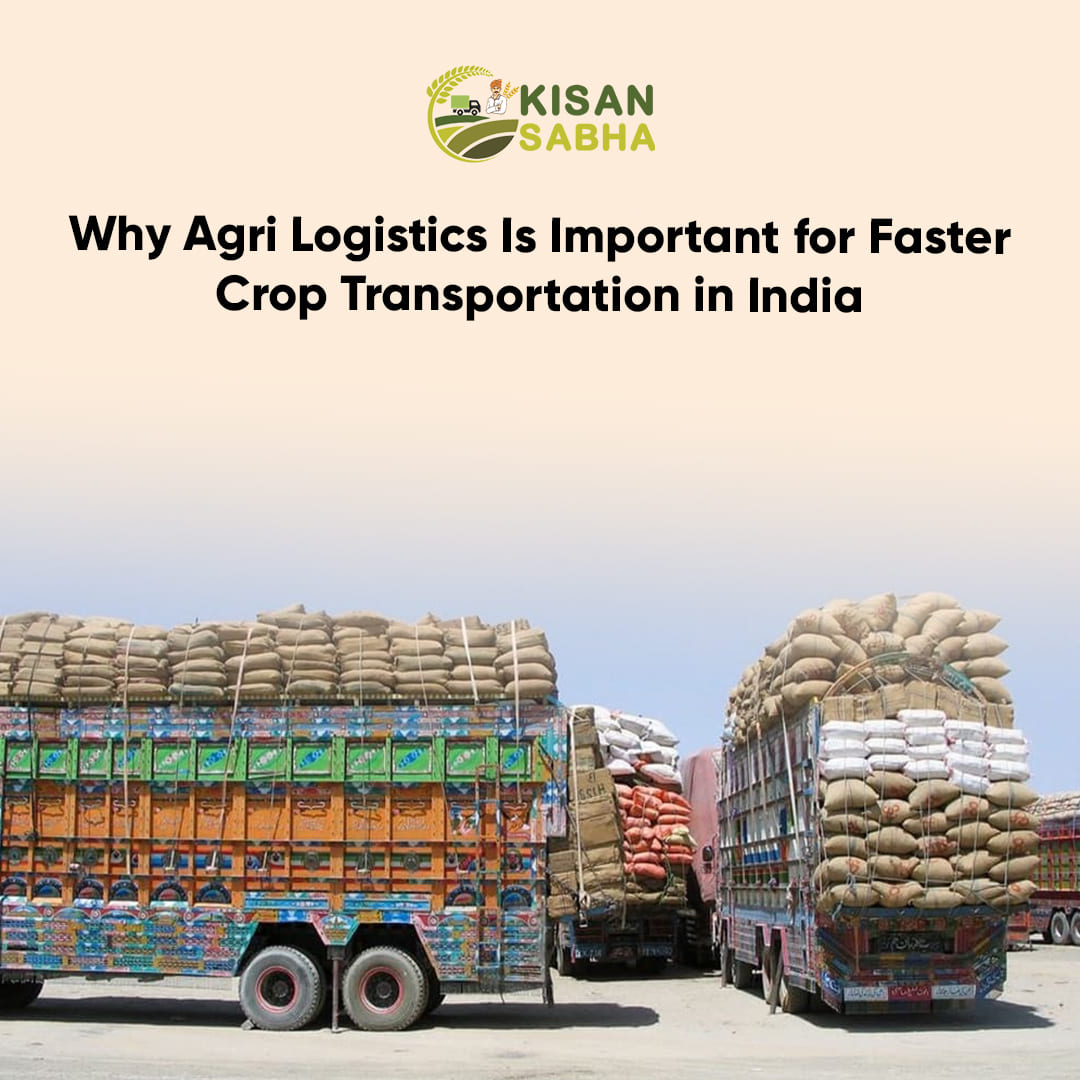
India is one of the world’s largest agricultural producers, but moving crops quickly and safely from farms to markets remains a major challenge. Delays in transportation, poor storage facilities, and inefficient supply chains often lead to crop damage, lower farmer income, and food wastage.
This is why agri logistics is becoming one of the most important parts of modern agriculture in India.
Agri logistics includes:
- Transportation
- Warehousing
- Cold chain systems
- Packaging
- Supply chain coordination
Efficient agri logistics helps crops reach markets faster, reduces losses, and improves the overall agriculture supply chain.
According to industry reports, India continues to face major post-harvest and logistics challenges due to fragmented infrastructure, weak cold-chain systems, and poor last-mile connectivity.
What is Agri Logistics?
Agri logistics refers to the complete movement and management of agricultural produce from farms to consumers.
It includes:
- Crop collection
- Storage and warehousing
- Transportation
- Distribution
- Market delivery
The goal of agri logistics is to ensure that crops are transported:
- Quickly
- Safely
- Efficiently
- With minimal losses
Modern agri logistics also uses technology for route planning, tracking, and supply chain management.
Why Faster Crop Transportation is Important in India
1. To Reduce Post-Harvest Losses
One of the biggest problems in Indian agriculture is post-harvest loss.
Government-backed studies show that India loses agricultural produce worth nearly ₹1.53 lakh crore annually due to post-harvest inefficiencies.
Poor transportation and delayed delivery are major reasons behind these losses.
Perishable crops like:
- Fruits
- Vegetables
- Tomatoes
- Grapes
- Onions
It can spoil quickly if transportation is slow or storage conditions are poor.
2. Faster Transportation Helps Farmers Get Better Prices
When crops reach markets on time:
- Quality remains better
- Spoilage is reduced
- Farmers get better selling prices
In many cases, transportation delays force farmers to sell produce at lower prices before crops get damaged.
Reports from Andhra Pradesh showed that tomato farmers faced heavy losses partly because produce was damaged during transportation and supply chain delays.
3. Agri Logistics Improves Supply Chain Efficiency
India’s agriculture supply chain is highly fragmented.
Produce often passes through:
- Multiple middlemen
- Local transport systems
- Temporary storage points
This increases:
- Delivery time
- Handling damage
- Transportation costs
Efficient logistics systems improve coordination across the supply chain and reduce unnecessary delays.
4. Cold Chain Infrastructure is Critical for Perishable Crops
Fruits and vegetables require temperature-controlled transportation and storage.
However, studies show that India’s cold storage capacity is still much lower than required for annual perishable production.
Without proper cold-chain logistics:
- Produce quality declines quickly
- Shelf life reduces
- Export opportunities get affected
Better agri logistics help maintain freshness during transportation.
5. Faster Logistics Supports Food Security
When crops are wasted during transportation:
- Food supply reduces
- Prices increase
- Consumers are affected
Efficient agri logistics ensures that food reaches markets and consumers without major losses.
Industry experts now consider logistics a key pillar of food security and agricultural value creation.
6. Better Transportation Helps Small Farmers
Small and marginal farmers often struggle to access reliable transport.
Strong agri logistics systems help them:
- Reach distant markets
- Access larger buyers
- Reduce dependency on local traders
This improves income opportunities and market reach.
7. Technology is Making Agri Logistics Smarter
Modern agri logistics is becoming technology-driven.
New systems now use:
- GPS tracking
- Route optimization
- AI-based supply chain management
- Digital marketplaces
- Real-time monitoring
Technology improves delivery planning and reduces transportation delays.
Research shows that traceability and real-time tracking are becoming important parts of modern supply chain logistics.
8. Efficient Logistics Supports Agricultural Exports
India exports large quantities of:
- Grapes
- Rice
- Fruits
- Vegetables
Export-quality produce requires:
- Fast transportation
- Proper packaging
- Temperature management
Weather disruptions and logistics gaps directly affect agricultural exports.
Stronger agri logistics can help India improve its global agriculture trade competitiveness.
9. Modern Warehousing Improves Crop Transportation
Transportation and warehousing work together.
Modern warehouses help:
- Reduce crop deterioration
- Improve inventory management
- Enable smoother transportation planning
Experts believe that scientific warehousing and logistics infrastructure are essential for reducing wastage and improving price stability.
10. Agri Logistics is Essential for the Future of Indian Agriculture
As agricultural production grows, logistics systems must also improve.
India’s agricultural market is expanding rapidly, increasing pressure on transportation and supply chain systems.
Future-ready agriculture will depend on:
- Faster transportation
- Digital coordination
- Efficient supply chains
- Better infrastructure
Without strong agri-logistics, agricultural growth will remain limited.
Also Read:-Why Modern Agriculture Needs Better Farmer Networks
Major Challenges in India’s Agri Logistics Sector
Despite progress, several challenges still exist:
- Poor rural road connectivity
- Limited cold-chain infrastructure
- Fragmented transportation systems
- High logistics costs
- Lack of digital coordination
Industry discussions also highlight that India’s logistics costs remain significantly higher than those of developed economies.
How KisanSabha Helps Improve Agriculture Logistics
Digital platforms like KisanSabha are helping simplify agriculture logistics and transportation by connecting different stakeholders on one platform.
KisanSabha helps:
- Connect farmers, transporters, dealers, and buyers
- Improve communication in agriculture trade
- Support faster coordination for crop movement
- Create better market access opportunities
By helping stakeholders stay connected, KisanSabha is contributing towards a smarter and more efficient agriculture supply chain ecosystem in India.
Faster Agriculture Transportation is the Need of the Future
Modern agriculture is no longer only about crop production – it is also about how efficiently crops move from farms to markets.
Better agri logistics helps:
- Reduce crop losses
- Improve farmer income
- Strengthen supply chains
- Support food security
- Increase export potential
As India’s agriculture sector continues to modernize, efficient transportation and connected platforms like KisanSabha will play an increasingly important role in building a faster, smarter, and more reliable agriculture ecosystem.
Frequently Asked Questions
Agri logistics helps reduce crop losses, improve transportation speed, and strengthen agriculture supply chains.
Faster transportation reduces spoilage and helps farmers get better prices in markets.
Major challenges include poor storage, weak cold chains, transportation delays, and fragmented supply chains.