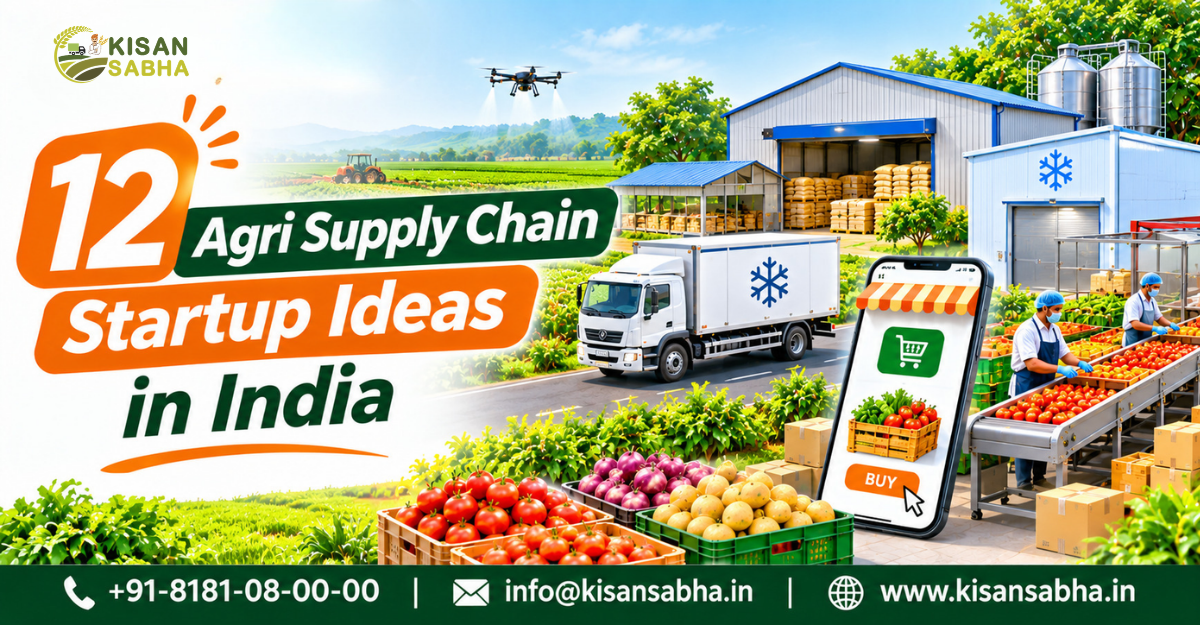
India’s agriculture sector offers significant opportunities for entrepreneurs who want to build practical, technology-driven businesses. However, farming is only one part of the agricultural economy. Getting agricultural produce from farms to markets, retailers and consumers is equally important.
This is where the agri supply chain creates business opportunities.
Farmers often struggle with limited storage facilities, expensive transportation, inadequate market information, product wastage and difficulties connecting with bulk buyers. At the same time, traders, retailers, food processors and transporters need reliable suppliers and efficient logistics services.
These challenges create opportunities for new businesses.
If you are planning to enter the agriculture sector, exploring the right agri supply chain startup ideas in India can help you identify a business opportunity with real market demand.
In this guide, we will explore 12 practical agriculture supply chain business ideas, explain how each business works, identify potential customers and discuss how entrepreneurs can start with a manageable investment.
What Is an Agricultural Supply Chain?
An agricultural supply chain is the complete network of activities involved in moving agricultural products from farms to their final destinations.
It includes everything from harvesting and collection to grading, packaging, storage, transportation, distribution and delivery.
A typical agricultural supply chain follows this process:
Farmers → Collection Centres → Grading and Packaging → Warehouses → Transportation → Mandis and Wholesalers → Retailers and Processors → Consumers
Every stage plays an important role in maintaining product quality, controlling costs and ensuring timely delivery.
However, several challenges affect this process:
- Limited storage facilities: Farmers may have to sell their produce immediately after harvesting because suitable storage is unavailable.
- Transportation problems: Finding affordable and reliable vehicles can be difficult, particularly for small farmers.
- Post-harvest losses: Poor handling, packaging and delayed transportation can damage agricultural products.
- Lack of market information: Farmers and traders may struggle to identify markets offering better prices.
- Unorganised transactions: Manual records and delayed payments can create problems between buyers and sellers.
- Limited buyer connections: Small farmers often find it difficult to connect directly with bulk purchasers.
For entrepreneurs, these problems represent opportunities to develop services that make the agricultural supply chain more organised, affordable and efficient.
12 Best Agri Supply Chain Startup Ideas in India
Here are 12 business opportunities that address different challenges in India’s agricultural supply chain.
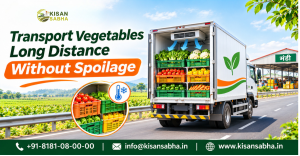
1. Cold Chain Transportation Business
Business opportunity: Temperature-controlled transportation for perishable agricultural products.
Fruits, vegetables, dairy products and other perishable goods require proper handling and suitable temperatures during transportation. Without appropriate facilities, products can lose freshness and commercial value before reaching their destination.
A cold chain transportation business helps maintain suitable conditions throughout the delivery process.
How the business works:
- Arrange refrigerated or insulated vehicles.
- Connect farmers, exporters and agricultural traders with transport providers.
- Offer transportation services on selected agricultural routes.
- Provide shared transportation facilities for businesses with smaller shipments.
Target customers:
- Farmers and Farmer Producer Organisations (FPOs).
- Fruit and vegetable traders.
- Food processing companies.
- Agricultural exporters.
- Wholesale distributors.
How to start: Instead of purchasing refrigerated trucks immediately, partner with existing vehicle owners and operate on one agricultural route. Expand your network as demand increases.
Revenue model: Per-trip transportation charges, route-based contracts and logistics service fees.
2. Farm-to-Retail Agricultural Aggregation Business
Business opportunity: Connecting small farmers with retailers and bulk buyers.
Many small farmers produce good-quality agricultural products but cannot independently supply large quantities to organised buyers. Retailers, hotels and food businesses, meanwhile, need consistent supplies.
An agricultural aggregation business connects these two groups.
How the business works:
- Identify farmers producing the same crop in a particular region.
- Collect produce from participating farmers.
- Check quality and organise products according to buyer requirements.
- Supply aggregated quantities to retailers, hotels and wholesalers.
For example, an entrepreneur could connect tomato farmers in one agricultural cluster with vegetable retailers in a nearby city.
Target customers:
- Retail vegetable stores.
- Hotels and restaurants.
- Food processing companies.
- Wholesale traders.
- Institutional buyers.
How to start: Begin with one crop and one local market. Establish buyer relationships before purchasing or collecting large quantities of produce.
Revenue model: Trading margins, aggregation charges and supply contracts.
3. Agricultural Grading, Sorting and Packaging Centre
Business opportunity: Providing professional grading and packaging services for agricultural produce.
Not every agricultural product has the same size, quality or market value. When different grades of produce are mixed together, farmers may not receive the best possible price for higher-quality products.
A grading and packaging centre helps organise produce according to quality, size and buyer requirements.
How the business works:
- Collect agricultural produce from farmers.
- Sort products according to size and quality.
- Remove damaged or unsuitable products.
- Pack produce according to market requirements.
- Supply graded products to wholesalers, retailers and processors.
Target customers:
- Farmers.
- FPOs.
- Mandi traders.
- Agricultural exporters.
- Food processing businesses.
How to start: Choose one agricultural product, such as potatoes, onions or tomatoes. Start with basic sorting equipment and expand operations according to customer demand.
Revenue model: Per-unit grading charges, packaging fees and bulk service contracts.
4. Shared Agricultural Warehouse Marketplace
Business opportunity: Connecting farmers and traders with available warehouse and cold storage facilities.
Storage is an important part of the agricultural supply chain. However, finding suitable warehouse space at the right location and price can be challenging.
At the same time, warehouse owners may have unused storage capacity.
A digital warehouse marketplace can connect storage providers with farmers, traders and agricultural businesses.
How the business works:
- Register warehouses and storage facilities on a digital platform.
- Display available storage locations and facility details.
- Allow users to submit storage requirements.
- Connect customers with suitable warehouse owners.
- Facilitate enquiries and booking communication.
For example, a farmer looking for temporary potato storage could search for available facilities in a nearby district instead of contacting multiple warehouse operators individually.
Target customers:
- Farmers.
- Agricultural traders.
- FPOs.
- Wholesalers.
- Food processing companies.
- Warehouse owners.
How to start: Build a database of warehouse facilities in one district. Collect accurate information about storage capacity, location, available facilities and contact details.
Revenue model: Listing fees, booking commissions, lead-generation charges or subscription plans.
Businesses can explore the KisanSabha Warehouse Inquiry service to understand how warehouse enquiries can connect agricultural businesses with storage opportunities.
5. Warehouse Receipt Financing Support Business
Business opportunity: Helping farmers connect stored agricultural produce with suitable financing options.
Farmers sometimes need immediate funds after harvesting but may prefer to store their produce rather than sell everything immediately.
Warehouse receipt financing provides a mechanism through which eligible stored commodities can be used as collateral for financing, subject to applicable regulations and lender requirements.
Entrepreneurs can build support services that connect farmers, registered warehouses and financial institutions.
How the business works:
- Connect farmers with eligible storage facilities.
- Help them understand warehouse receipt processes.
- Coordinate with banks and authorised financial institutions.
- Assist with documentation and communication.
- Provide information about applicable financing options.
Target customers:
- Farmers.
- FPOs.
- Agricultural traders.
- Warehouse operators.
- Financial institutions.
How to start: Develop partnerships with eligible warehouses and regulated financial institutions. Understand the applicable WDRA framework and lending requirements before offering services.
Revenue model: Permitted service charges and referral arrangements with authorised partners.
Important: Financing activities require careful regulatory consideration. Do not offer loans or make financing guarantees without the necessary authorisation.
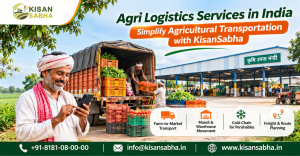
6. Agricultural Truck Load Matching Platform
Business opportunity: Connecting agricultural goods suppliers with available trucks and transporters.
Transportation is one of the most important parts of the agricultural supply chain. Farmers and traders need vehicles to move produce, while transporters need regular loads to keep their trucks productive.
However, finding suitable vehicles and managing return loads can be difficult.
A digital agricultural truck load-matching platform can help solve this problem.
How the business works:
- Allow agricultural businesses to post transportation requirements.
- Connect them with available truck owners.
- Display load details, pickup locations and delivery destinations.
- Help transporters find suitable return loads.
- Support communication between shippers and vehicle owners.
For example, a transporter delivering potatoes to Delhi could look for another agricultural load for the return journey instead of travelling back with an empty vehicle.
Target customers:
- Truck owners.
- Transporters.
- Farmers.
- Agricultural traders.
- FPOs.
- Wholesale distributors.
How to start: Focus on one agricultural transportation corridor. Build a network of verified transporters and regular agricultural shippers before expanding.
Revenue model: Subscription plans, per-booking charges and transportation commissions.
Entrepreneurs can explore KisanSabha Agri Logistics to understand how digital transportation connections can support agricultural businesses.
7. Agricultural Quality Testing and Product Traceability
Business opportunity: Helping buyers verify agricultural product quality and origin.
Quality plays an important role in agricultural trading. Large buyers, food processors and exporters often need reliable information about product quality, origin and handling.
A quality testing and traceability business can help create greater transparency between farmers and buyers.
How the business works:
- Arrange agricultural product testing through suitable laboratories.
- Provide grading and quality assessment services.
- Record information about the product’s origin.
- Generate QR-based traceability records where appropriate.
- Share relevant quality reports with buyers.
Target customers:
- Agricultural exporters.
- Food processing companies.
- Premium food brands.
- FPOs.
- Large agricultural buyers.
How to start: Begin with one product category, such as spices, grains or organic produce. Partner with appropriately accredited laboratories for testing services.
Revenue model: Testing charges, quality assessment fees and traceability service subscriptions.
8. Digital Software for Mandi Dealers and Commission Agents
Business opportunity: Helping mandi businesses manage daily transactions digitally.
Many agricultural trading activities involve multiple transactions, customers, products and payments. Managing these records manually can lead to calculation errors, missing information and payment disputes.
A simple digital software solution can make these operations easier.
How the business works:
Develop a mobile-friendly platform with features such as:
- Digital billing and invoicing.
- Daily transaction records.
- Stock management.
- Customer and supplier records.
- Payment tracking.
- Outstanding payment reminders.
- Reports and business summaries.
Target customers:
- Mandi commission agents.
- Agricultural wholesalers.
- Grain traders.
- Vegetable dealers.
- Agricultural distributors.
How to start: Talk to 10–20 mandi dealers to understand their daily problems. Develop a simple solution around their most common requirements instead of building too many features initially.
Revenue model: Monthly subscriptions, annual software plans and premium features.
9. Agricultural Price Intelligence and Demand Forecasting Platform
Business opportunity: Providing useful market information to farmers and agricultural traders.
Agricultural prices can vary between markets and change according to supply, demand, season and transportation costs.
Farmers and traders need reliable market information to make better selling and purchasing decisions.
A price intelligence platform can help users access relevant agricultural market information.
How the business works:
- Collect agricultural market price information from reliable sources.
- Display crop-wise and market-wise prices.
- Provide price alerts through mobile notifications or WhatsApp.
- Help users compare prices across selected markets.
- Develop demand insights using reliable historical information.
Target customers:
- Farmers.
- Agricultural traders.
- FPOs.
- Food processors.
- Agricultural distributors.
How to start: Focus on a few major crops and selected mandis. Use reliable and clearly identified data sources. Start with simple daily price updates before developing advanced forecasting tools.
Revenue model: Premium subscriptions, business intelligence services and B2B data solutions.
10. Small-Scale Agricultural Food Processing Business
Business opportunity: Converting surplus agricultural produce into value-added food products.
Agricultural produce that does not meet fresh-market requirements may still be suitable for processing, depending on its condition and food safety standards.
Small-scale processing businesses can convert suitable produce into products with longer shelf life and different market applications.
Possible business opportunities:
- Tomato processing and pulp production.
- Fruit dehydration.
- Pickle manufacturing.
- Vegetable processing.
- Fruit-based products.
- Grain and pulse processing.
How the business works:
- Identify a crop with regular local availability.
- Source suitable raw materials from farmers.
- Establish a small processing facility.
- Develop products according to customer demand.
- Supply products to retailers, wholesalers and food businesses.
Target customers:
- Retail stores.
- Food distributors.
- Restaurants.
- Hotels.
- Food processing buyers.
How to start: Select one product and conduct market research before investing in machinery. Plan sourcing, food safety, packaging and distribution together.
Revenue model: Product sales, wholesale orders and B2B supply agreements.
Important: Check applicable FSSAI licensing, food safety, labelling and other business requirements before starting operations.
11. Reusable Agricultural Crate and Packaging Rental
Business opportunity: Renting reusable packaging to farmers, traders and agricultural aggregators.
Packaging has a direct impact on the quality of agricultural produce during handling and transportation.
Poor-quality packaging can increase damage, particularly when fruits and vegetables are transported over long distances.
A reusable crate rental business can offer an alternative to repeatedly purchasing disposable or unsuitable packaging.
How the business works:
- Purchase suitable reusable agricultural crates.
- Rent them to farmers, traders and aggregators.
- Establish collection and return points.
- Maintain a record of rented and returned crates.
- Clean and inspect crates before reuse.
Target customers:
- Vegetable traders.
- Fruit suppliers.
- Farmers.
- Agricultural aggregators.
- Wholesale distributors.
How to start: Begin with a small inventory in one mandi or agricultural cluster. Use a deposit and tracking system to manage returns.
Revenue model: Daily or weekly rental charges, bulk rental agreements and packaging management fees.
12. Hyperlocal Agricultural B2B Supply Business
Business opportunity: Supplying fresh agricultural products directly to local businesses.
Restaurants, kirana stores, hotels and caterers require regular supplies of fruits, vegetables and other agricultural products.
However, purchasing from multiple suppliers can increase procurement time and operational costs.
A hyperlocal B2B agricultural supply business can simplify this process.
How the business works:
- Identify regular buyers in a particular locality.
- Connect with nearby farmers, traders and wholesalers.
- Collect orders from business customers.
- Arrange procurement and quality checks.
- Deliver products according to agreed schedules.
Target customers:
- Kirana stores.
- Restaurants.
- Hotels.
- Caterers.
- Small food businesses.
How to start: Select one locality and a limited product range. Build regular buyer relationships and plan deliveries around fixed routes.
Revenue model: Product margins, delivery charges and recurring B2B supply contracts.
Comparison of 12 Agri Supply Chain Business Ideas
Not every agricultural startup requires the same investment or operational resources. Some businesses need vehicles, warehouses or machinery, while others can begin with a digital platform and a small team.
The following comparison provides a general planning estimate.
| Business Idea | Estimated Capital Requirement | Difficulty | Revenue Model |
| Cold chain transportation | High | High | Per-trip charges |
| Farm-to-retail aggregation | Medium–High | High | Trading margins |
| Grading and packaging centre | Medium | Medium | Service fees |
| Warehouse marketplace | Low | Medium | Commission and listings |
| Warehouse receipt financing support | Medium | High | Service and referral fees |
| Truck load matching platform | Low–Medium | Medium | Subscription and commission |
| Quality testing and traceability | Medium | Medium | Testing and service fees |
| Mandi management software | Low | Medium | Monthly subscription |
| Price intelligence platform | Low | Low–Medium | Subscription |
| Food processing business | Medium–High | Medium–High | Product sales |
| Reusable crate rental | Low–Medium | Low–Medium | Rental charges |
| Hyperlocal B2B supply | Medium | Medium | Margins and delivery fees |
These are indicative business-planning categories, not verified investment figures. Actual capital requirements depend on location, scale, infrastructure, technology and operating costs.
Which Agri Supply Chain Startup Is Best for Beginners?
If you are starting with limited capital, consider business models that do not require purchasing expensive physical assets immediately.
Some options worth evaluating include:
- Warehouse marketplace: Start by building a network of warehouse owners and potential customers.
- Truck load matching platform: Connect existing transporters with agricultural shippers.
- Mandi management software: Develop a simple digital solution for local dealers.
- Agricultural price information service: Provide useful market updates through digital channels.
- Reusable crate rental: Start with a small inventory and serve one agricultural market.
The best choice depends on local demand, customer willingness to pay and your ability to manage daily operations.
How to Start an Agri Supply Chain Business in India
Having a business idea is only the first step. A successful agricultural supply chain startup needs a clear customer base, reliable partners and a business model that solves a real problem.
Follow these practical steps before making a large investment.
Step 1: Identify a Real Problem
Talk to farmers, traders, transporters, warehouse owners and retailers.
Understand their daily challenges. Find out where they lose money, waste time or struggle to find reliable services.
Do not build a business simply because a particular technology is popular.
Step 2: Select One Crop and One Location
Avoid trying to serve every agricultural product and market from the beginning.
Choose one crop, one agricultural cluster or one transportation route.
A focused business is easier to test, manage and improve.
Step 3: Identify Your Paying Customers
A person who uses your service is not necessarily the person who pays for it.
For example:
- A farmer may use a warehouse marketplace, while the warehouse owner pays a listing fee.
- A transporter may use a load-matching platform, while the shipper pays a booking charge.
- A mandi dealer may directly purchase a software subscription.
Understand who receives the value and who is willing to pay for it.
Step 4: Build Partnerships Before Investing
Agricultural supply chains depend on strong local networks.
Develop relationships with:
- Farmers and FPOs.
- Warehouse operators.
- Transporters.
- Mandi dealers.
- Agricultural traders.
- Retailers and food processors.
These partnerships can help you understand demand and build a reliable customer base.
Step 5: Run a Small Pilot Project
Test your business idea for four to eight weeks with real customers.
For example, if you want to start an agricultural logistics platform, begin with one route and a small transporter network.
Measure:
- Number of active customers.
- Completed transactions.
- Customer acquisition costs.
- Repeat orders.
- Operational expenses.
- Customer satisfaction.
Use the results to improve your business model.
Step 6: Understand Legal and Regulatory Requirements
Different agricultural activities have different compliance requirements.
Depending on your business model and location, you may need to consider:
- Business registration.
- GST registration, where applicable.
- APMC-related requirements, where applicable.
- FSSAI licensing for relevant food businesses.
- Transport and vehicle permits.
- Warehouse registration and applicable WDRA requirements.
- State-specific trade and operational permissions.
Consult an appropriate professional and verify current requirements before launching.
Government Support and Opportunities for Agri Startups in India
Entrepreneurs planning to enter agricultural infrastructure, storage, processing and technology should explore relevant government initiatives.
Some programmes and institutions worth researching include:
1. Agriculture Infrastructure Fund (AIF)
The Agriculture Infrastructure Fund is an initiative supporting eligible agricultural infrastructure projects. Entrepreneurs should review its current guidelines, eligible activities and financing conditions.
2. Startup India
Startup India provides information about startup recognition, entrepreneurship support and relevant government initiatives.
3. Ministry of Agriculture and Farmers Welfare
The Ministry provides information about agricultural policies, programmes and initiatives supporting the agriculture sector.
4. Warehouse Development and Regulatory Authority (WDRA)
Entrepreneurs interested in agricultural warehousing and negotiable warehouse receipts should understand the applicable registration and regulatory framework.
Note: Scheme eligibility, benefits, application procedures and regulatory requirements can change. Always consult the latest official guidelines before making financial or business decisions.
How KisanSabha Supports Agricultural Supply Chain Connections
Starting an agricultural supply chain business becomes easier when entrepreneurs can access the right network of farmers, traders, transporters and service providers.
Building these connections independently can take considerable time.
KisanSabha is an agriculture and logistics platform that provides digital services for agricultural market participants.
Entrepreneurs exploring agriculture-related business opportunities can discover the following services:
Warehouse Inquiry
Connect with warehouse-related enquiries and explore storage opportunities through the KisanSabha Warehouse Inquiry page.
Agri Logistics
Explore transportation-related opportunities and connections through KisanSabha Agri Logistics.
Farmer and Business Directory
Explore the KisanSabha Directory to discover agricultural participants and potential business connections.
Mandi Rate Information
Access agricultural market information through the KisanSabha Mandi Rate section.
Buy Leads and Sell Leads
Explore Buy Leads and Sell Leads to identify potential buying and selling requirements.
Explore Agriculture Startup Opportunities
Discover additional information through the KisanSabha Agritech Startups, Agri Supply Chain Startups and Mandi Startup pages.
These resources can help entrepreneurs explore agricultural business connections and understand different parts of the supply chain.
Looking to explore agricultural business opportunities? Visit KisanSabha and register to discover its agriculture and logistics services.
Common Mistakes to Avoid When Starting an Agri Supply Chain Startup
Even a promising agricultural business idea can struggle if the founder overlooks practical challenges.
Here are some common mistakes to avoid:
1. Starting Without Market Research
Do not assume that farmers or traders will automatically use your service. Understand their existing alternatives and willingness to pay.
2. Expanding Too Quickly
Trying to serve multiple states, crops and customer segments from day one can increase operating costs.
3. Investing in Infrastructure Too Early
Avoid purchasing warehouses, vehicles or expensive machinery before validating customer demand.
4. Ignoring Working Capital
Agricultural trading often involves payment cycles, inventory expenses and transportation costs. Plan cash flow carefully.
5. Depending Only on Technology
An app cannot solve every agricultural supply chain problem. Reliable local partnerships and customer support remain essential.
6. Overlooking Product Quality
Poor handling, packaging and storage can damage customer relationships and create financial losses.
7. Ignoring Compliance
Understand the applicable business, food safety, transport and storage requirements before starting operations.
Frequently Asked Questions About Agri Supply Chain Startup Ideas
Some practical opportunities include cold chain transportation, agricultural warehousing, farm-to-retail aggregation, grading and packaging centres, truck load matching platforms, mandi management software and agricultural price intelligence services.
The best option depends on local demand, available resources and customer requirements.
Digital business models such as warehouse marketplaces, agricultural price information platforms, mandi management software and truck load-matching services can be started without purchasing large physical assets.
However, technology development, customer acquisition and daily operations still require investment.
Agricultural supply chain businesses can generate revenue through:
Subscription fees.
Transaction commissions.
Transportation charges.
Warehouse booking fees.
Product trading margins.
Packaging and grading service charges.
Rental income.
B2B service contracts.
The revenue model depends on the service offered and the customer segment.
Agricultural logistics can offer business opportunities because farmers, traders, retailers and food processors need transportation and distribution services.
However, profitability depends on route utilisation, transportation expenses, customer demand, payment cycles and operational efficiency. A small pilot is advisable before making a large investment.
Start by identifying a specific problem in agriculture. Research your target customers, validate demand, select a suitable business model and test the solution with a small group of users.
Once the business model is validated, you can invest in technology, partnerships and expansion.
Warehousing helps businesses store agricultural commodities after harvesting and before distribution or processing.
Suitable storage facilities can help manage inventory, improve distribution planning and reduce losses associated with improper storage.
Digital agriculture platforms can help farmers discover buyers, market information, transport services and other agricultural business connections.
Platforms such as KisanSabha provide services related to agricultural directories, market information, leads and logistics.
Common challenges include inadequate storage, post-harvest losses, transportation costs, fragmented supply networks, limited market information, inconsistent product quality and delayed payments.
Businesses that address these challenges can create practical opportunities in the agricultural economy.
Conclusion: Build a Business That Solves a Real Agricultural Problem
India’s agricultural supply chain offers opportunities beyond traditional farming and agricultural trading.
From cold chain transportation and warehouse marketplaces to digital mandi software and agricultural logistics platforms, entrepreneurs can explore different business models based on the problems they understand best.
However, choosing the right idea is only the beginning.
Start with one specific problem, understand your customers, build local partnerships and test your solution before investing heavily. Focus on creating a service that farmers, traders and agricultural businesses genuinely need.
If you are exploring agri supply chain startup ideas in India, digital agricultural platforms can also help you understand market connections and discover business opportunities.
ExploreKisanSabha to discover agricultural services, connect with industry participants and explore opportunities across the agricultural supply chain.