
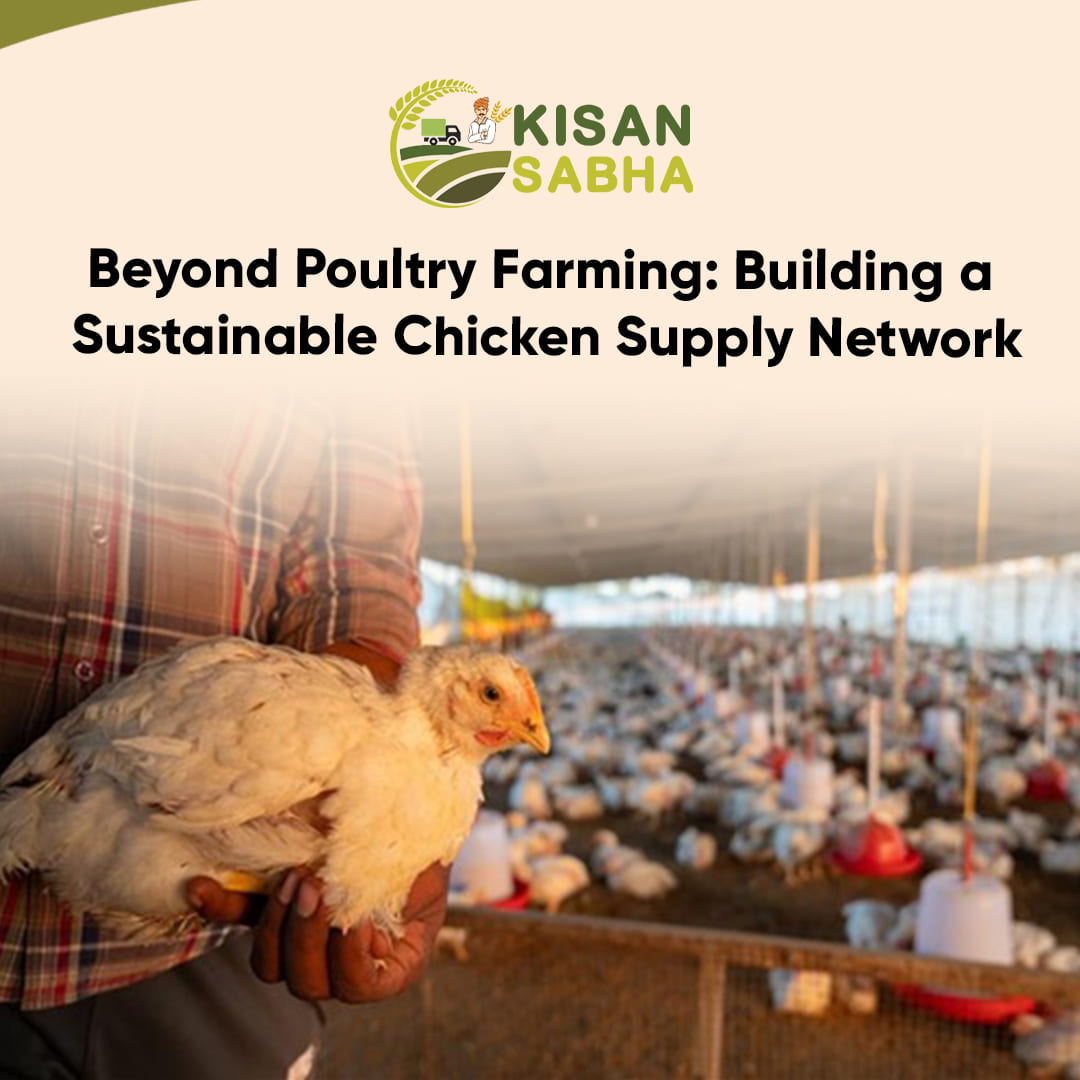
India’s poultry industry has grown significantly over the years, creating new opportunities for farmers, retailers, processors, and food businesses. However, raising healthy chickens is only one part of a successful poultry business. To ensure consistent income and reduce losses, farmers also need a reliable supply network that connects production with transportation, processing, and buyers.
A sustainable chicken supply network focuses on quality, food safety, efficient logistics, and market access. When every stage of the supply chain works together, farmers can reach more buyers while consumers receive safe and high-quality poultry products.
In this guide, we’ll explore the key elements of a sustainable chicken supply network and how digital marketplaces like KisanSabha help strengthen connections between poultry farmers and businesses.
What is a Chicken Supply Network?
A chicken supply network is the complete journey of poultry from the farm to the end buyer. It includes everyone involved in producing, transporting, processing, storing, and selling poultry products.
A typical supply network includes:
- Poultry farmers
- Feed suppliers
- Veterinary service providers
- Transporters
- Poultry processors
- Cold storage facilities
- Wholesalers
- Retailers
- Restaurants and food businesses
When these stakeholders work together, the supply chain becomes more organized and efficient.
Why Sustainability Matters in Poultry Farming
Sustainability is about maintaining productivity while using resources responsibly and supporting long-term business growth.
A sustainable poultry business focuses on:
- Healthy birds
- Responsible farm management
- Efficient use of feed and water
- Good hygiene practices
- Reduced product losses
- Better market planning
These practices help improve productivity while supporting food safety and business stability.
Start with Healthy Birds
A strong supply network begins with healthy poultry.
Farmers should:
- Purchase chicks from reliable hatcheries.
- Provide balanced nutrition.
- Ensure access to clean drinking water.
- Maintain clean housing.
- Follow recommended vaccination schedules.
Healthy birds are more likely to achieve better growth and meet market quality standards.
Focus on Farm Hygiene
Clean farm conditions play an important role in poultry production.
Good hygiene practices include:
- Cleaning poultry sheds regularly
- Disinfecting equipment
- Controlling pests
- Maintaining proper ventilation
- Removing waste safely
These practices help reduce disease risks and improve flock health.
Plan Your Market Before Production
One of the biggest challenges for poultry farmers is finding buyers after production is complete.
Instead of waiting until birds are ready for sale, farmers should identify potential buyers in advance.
Possible buyers include:
- Poultry wholesalers
- Retail meat shops
- Restaurants
- Hotels
- Food processors
- Institutional buyers
Planning ahead helps reduce delays and supports smoother business operations.
Transportation is Part of Product Quality
Once poultry leaves the farm, proper transportation becomes essential.
Safe transportation helps:
- Reduce handling stress
- Maintain product quality
- Improve delivery efficiency
- Support food safety
Using suitable transport methods also helps businesses maintain consistency throughout the supply chain.
Cold Chain Supports Freshness
Fresh poultry products require proper temperature control during storage and transportation.
An effective cold chain helps:
- Maintain freshness
- Reduce spoilage
- Preserve product quality
- Support safe food handling
Businesses involved in poultry processing and distribution should work with reliable cold storage and logistics partners whenever required.
Why Strong Buyer Connections Matter
Many poultry farmers depend on a limited number of local buyers, which can affect pricing and business growth.
Expanding market access allows farmers to explore opportunities with:
- Wholesalers
- Retailers
- Poultry processors
- Restaurants
- Hotels
- Food service businesses
Connecting with multiple buyers helps create a more resilient and sustainable business.
Building Better Business Connections
Growing poultry successfully is only one part of the business. Selling it through the right channels is equally important.
KisanSabha helps poultry farmers connect with wholesalers, retailers, processors, restaurants, and other business buyers through its digital marketplace.
By bringing producers and buyers together on one platform, KisanSabha helps improve market visibility and supports a more organized poultry supply network. Farmers can explore new business opportunities while reducing their dependence on limited local markets.
Best Practices for a Sustainable Chicken Supply Network
Whether you manage a small poultry farm or a larger commercial operation, these practices can help strengthen your business:
- Source healthy chicks from trusted suppliers.
- Maintain clean and well-ventilated poultry sheds.
- Provide balanced feed and clean water.
- Follow recommended vaccination and biosecurity practices.
- Plan transportation before delivery.
- Build relationships with reliable buyers.
- Maintain proper records for better farm management.
- Explore digital marketplaces to expand market reach.
Consistent management across every stage of the supply chain helps improve business performance over time.
Building a Stronger Future for Poultry Farmers
A successful poultry business is built on more than healthy birds. It requires careful planning, responsible farm management, efficient logistics, and strong buyer relationships.
As India’s poultry industry continues to grow, farmers who focus on quality and market access will be better positioned to create sustainable businesses. Digital platforms like KisanSabha help bridge the gap between poultry farmers and business buyers, making it easier to discover new opportunities and build long-term market connections.