
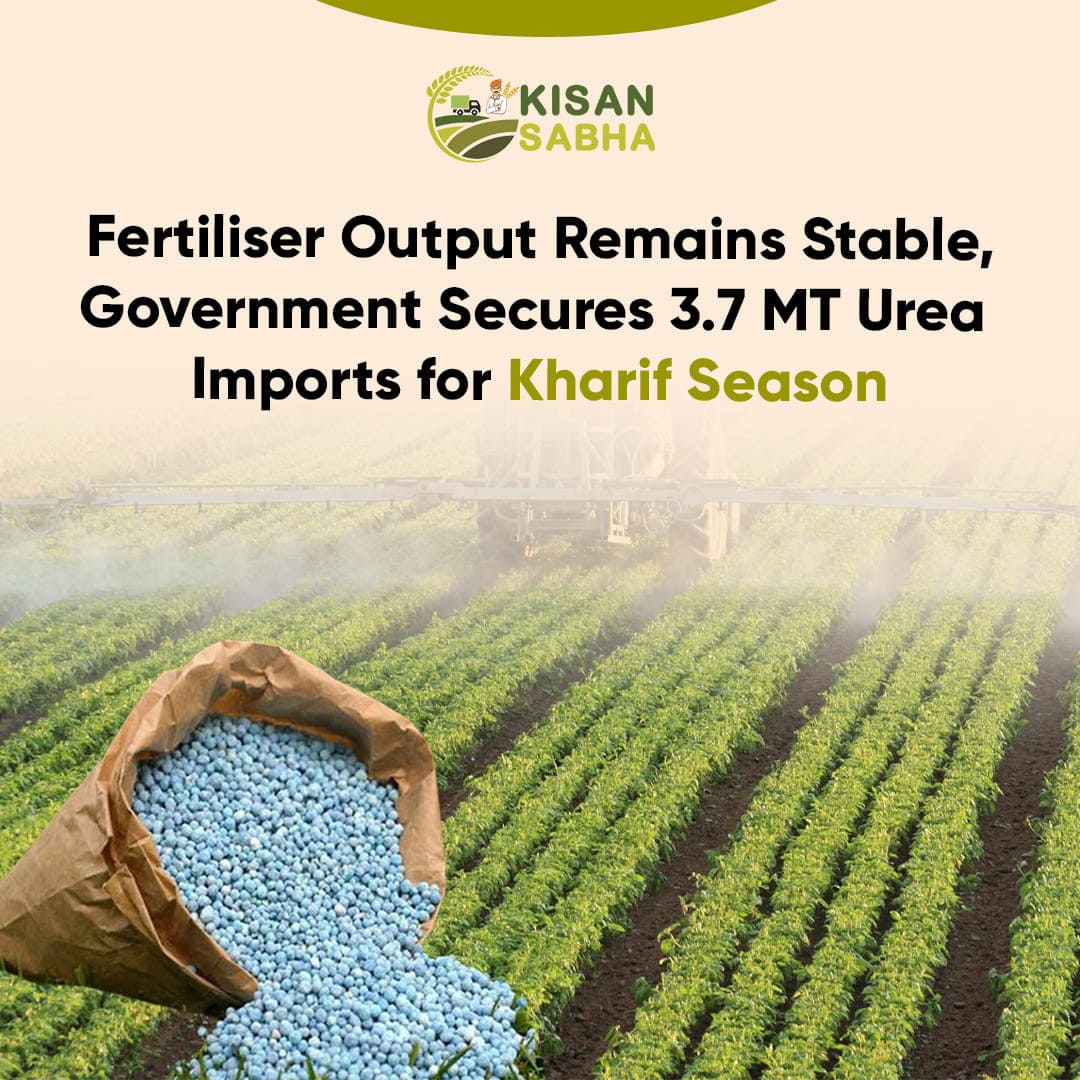
New Delhi: The Government of India has stated that fertiliser production has remained stable despite global supply disruptions linked to the West Asia situation. Officials confirmed that urea production reached around 3.74 million tonnes during March–April, nearly matching last year’s levels.
To ensure adequate availability ahead of the Kharif 2026 season, the government has also secured 3.7 million tonnes of urea through imports to meet any shortfall.
Production and Import Status
According to official data:
- Total fertiliser production (including DAP, NPKS, and others) stood at 6.23 million tonnes during March – April
- Fertiliser imports during the same period were around 1.53 million tonnes
- Combined availability increased by approximately 7.8 million tonnes, ensuring sufficient supply despite global challenges
Urea production alone was:
- 1.64 million tonnes in March
- 2.1 million tonnes in April
Availability of Other Fertilisers
Production of other key fertilisers during this period included:
- DAP: 0.48 million tonnes
- NPK: 1.26 million tonnes
- SSP: 0.74 million tonnes
Additionally, a global tender has been issued for 1.9 million tonnes of phosphatic fertilisers to further strengthen supply.
Strong Stock Position for Kharif 2026
The government reported that fertiliser availability remains strong:
- Total stock for Kharif 2026: 19.33 million tonnes
- Estimated requirement: 39.04 million tonnes
- Urea stock: 7.38 million tonnes
- DAP stock: 2.34 million tonnes
Officials stated that supply levels currently exceed immediate requirements, supported by improved planning, early stocking, and efficient logistics.
Importantly, there has been no change in the maximum retail price (MRP) of fertilisers, ensuring stability for farmers.
Also Read:- Government May Continue Covid-Like Fertiliser Subsidy to Shield Farmers from Price Rise
Supporting Farmers Through Better Market Linkages
While fertiliser availability and pricing remain stable, efficient access to inputs and market networks continues to be important for farmers during the crop season. Platforms like KisanSabha help farmers connect with dealers, suppliers, and transporters, enabling smoother coordination in sourcing inputs and managing agricultural operations.
Such connectivity becomes especially useful during peak seasons like Kharif, when timely access to resources and logistics plays a key role in farming activities.