
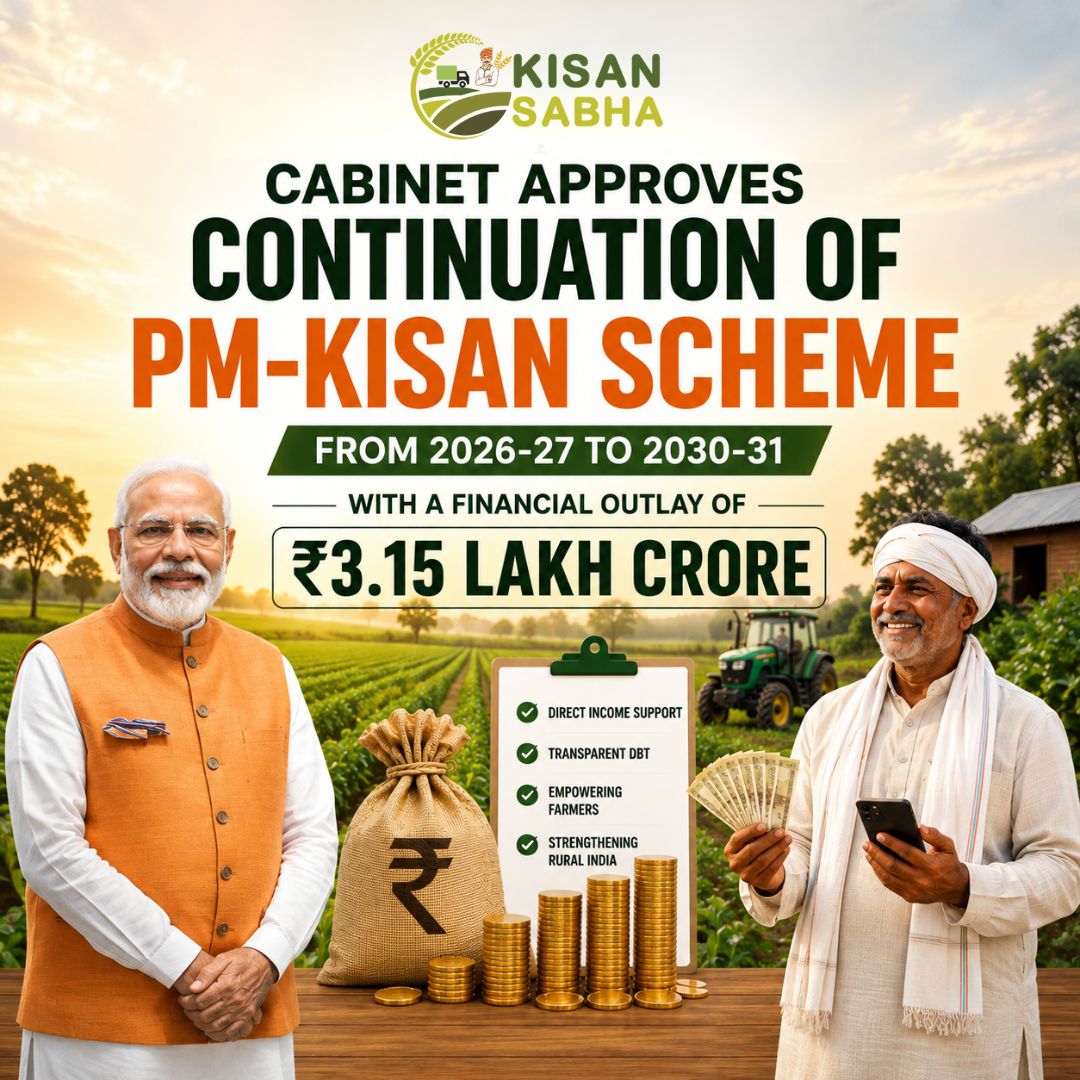
The Union Cabinet, chaired by Prime Minister Narendra Modi, has approved the continuation of the Pradhan Mantri Kisan Samman Nidhi (PM-KISAN) scheme from 2026-27 to 2030-31. The Cabinet has allocated a financial outlay of ₹3.15 lakh crore for the next five years, reaffirming the government’s commitment to providing direct income support to eligible farmer families.
The PM-KISAN scheme, launched in February 2019, provides ₹6,000 annually to eligible landholding farmer families through Direct Benefit Transfer (DBT) in three equal instalments. The government said the scheme enables farmers to invest in agricultural inputs while promoting transparency through Aadhaar authentication and digital verification.
More Than ₹4.47 Lakh Crore Disbursed Since Launch
According to the government, over ₹4.47 lakh crore has been transferred directly into farmers’ bank accounts through 23 instalments since the scheme was introduced.
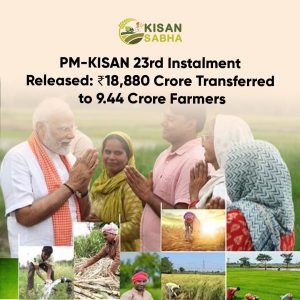
Under the 23rd instalment, more than 9.49 crore farmers received financial assistance, with over ₹18,984 crore transferred through the DBT system.
During the COVID-19 pandemic, the scheme also provided financial support by disbursing more than ₹1.71 lakh crore to eligible beneficiaries.
Women Farmers Continue to Benefit
The government stated that women farmers have received more than ₹1.06 lakh crore under PM-KISAN. Nearly one out of every four beneficiaries of the scheme is a woman farmer, reflecting its outreach among women engaged in agriculture.
Support for Agricultural Investment
The financial assistance provided under PM-KISAN is intended to help farmers meet essential cultivation expenses, including the purchase of seeds, fertilisers, irrigation facilities, agricultural machinery, and other farming inputs.
According to the government, the scheme has helped reduce farmers’ dependence on informal credit sources while strengthening the financial stability of rural households.
Also Read:- Maharashtra Becomes First State Eligible for Second RKVY Installment After Timely Fund Utilisation
Independent Evaluation Highlights Scheme Impact
The government cited findings from an evaluation conducted by the Development Monitoring and Evaluation Office (DMEO) of NITI Aayog, which assessed the impact of PM-KISAN.
According to the evaluation:
- More than 92% of beneficiaries used the financial assistance for agricultural activities and farm investment.
- Around 85% reported improved agricultural income and reduced dependence on informal borrowing.
The government also noted that between 2020-21 and 2025-26, India’s foodgrain sector recorded significant growth, with:
- Cultivated area increasing by approximately 9.65%
- Productivity increasing by approximately 10.53%
- Total foodgrain production increasing by approximately 21.18%
Digital Delivery Through DBT
The government described PM-KISAN as an example of Digital India’s use in welfare delivery. Aadhaar-based authentication, digital beneficiary verification, and the Direct Benefit Transfer system are used to transfer financial assistance directly into eligible farmers’ bank accounts, reducing delays and improving transparency.
Government Reaffirms Long-Term Support for Farmers
With the approval of the scheme’s continuation until 2030-31, the government aims to strengthen farmers’ ability to invest in agriculture, improve productivity, reduce agricultural risks, and support the rural economy. The government described PM-KISAN as an important component of its farmer-focused initiatives supporting the vision of Viksit Bharat.
Agriculture & Market Perspective
Direct income support schemes such as PM-KISAN help improve farmers’ purchasing capacity for essential agricultural inputs. As farmers increasingly adopt digital platforms for farming decisions, access to reliable information, market updates, input suppliers, buyers, and agricultural services becomes equally important alongside financial assistance.
Platforms such as KisanSabha contribute to this digital ecosystem by connecting farmers with verified buyers and sellers, providing agriculture-related information, facilitating market access, and supporting smoother agricultural trade across different regions. These services can complement broader government initiatives aimed at improving farm productivity and strengthening rural livelihoods.
Reference By:- https://www.pib.gov.in/PressReleasePage.aspx?PRID=2292437®=48&lang=2